What’s in Lilly’s Purse?

Leave a comment

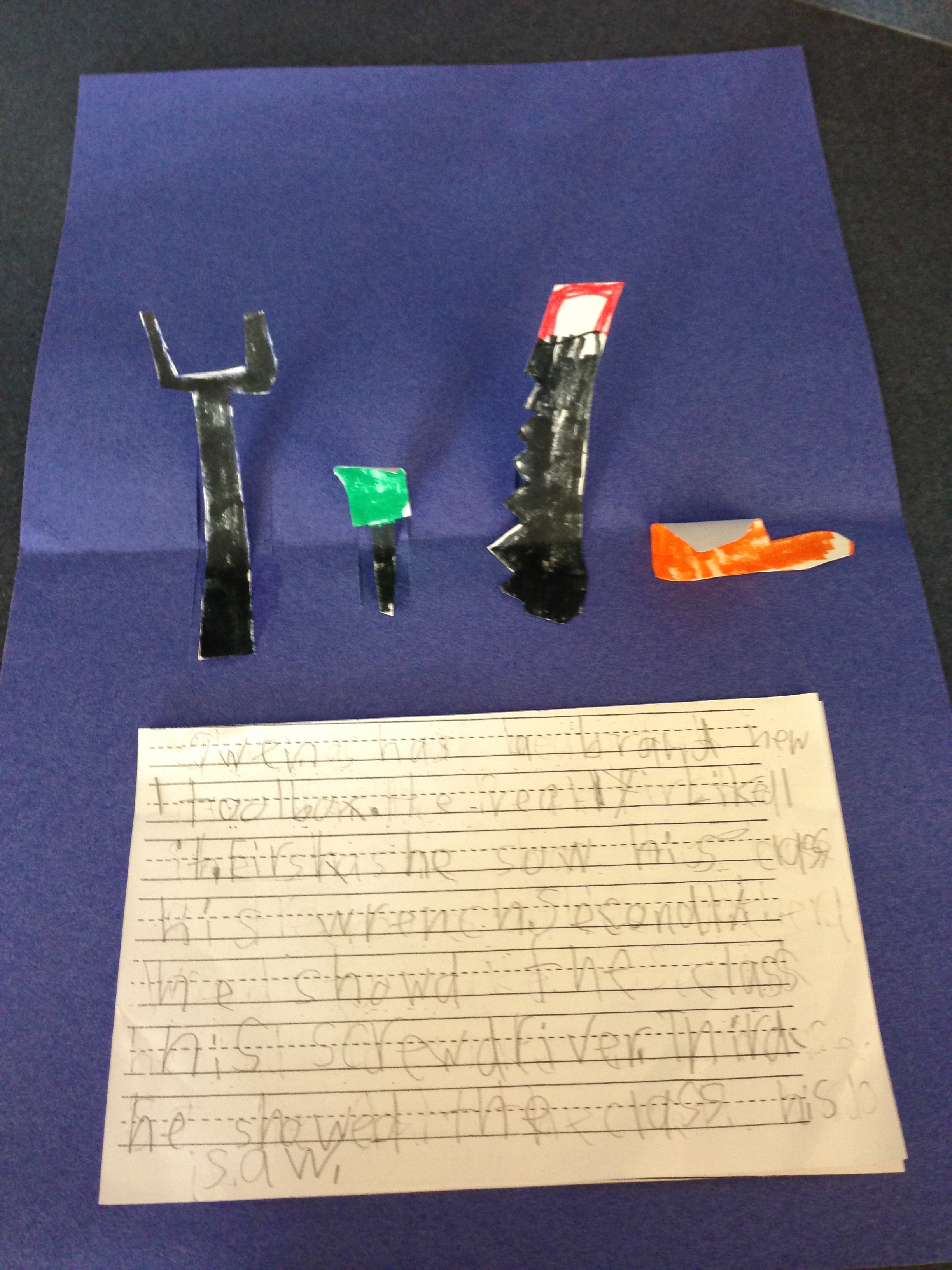
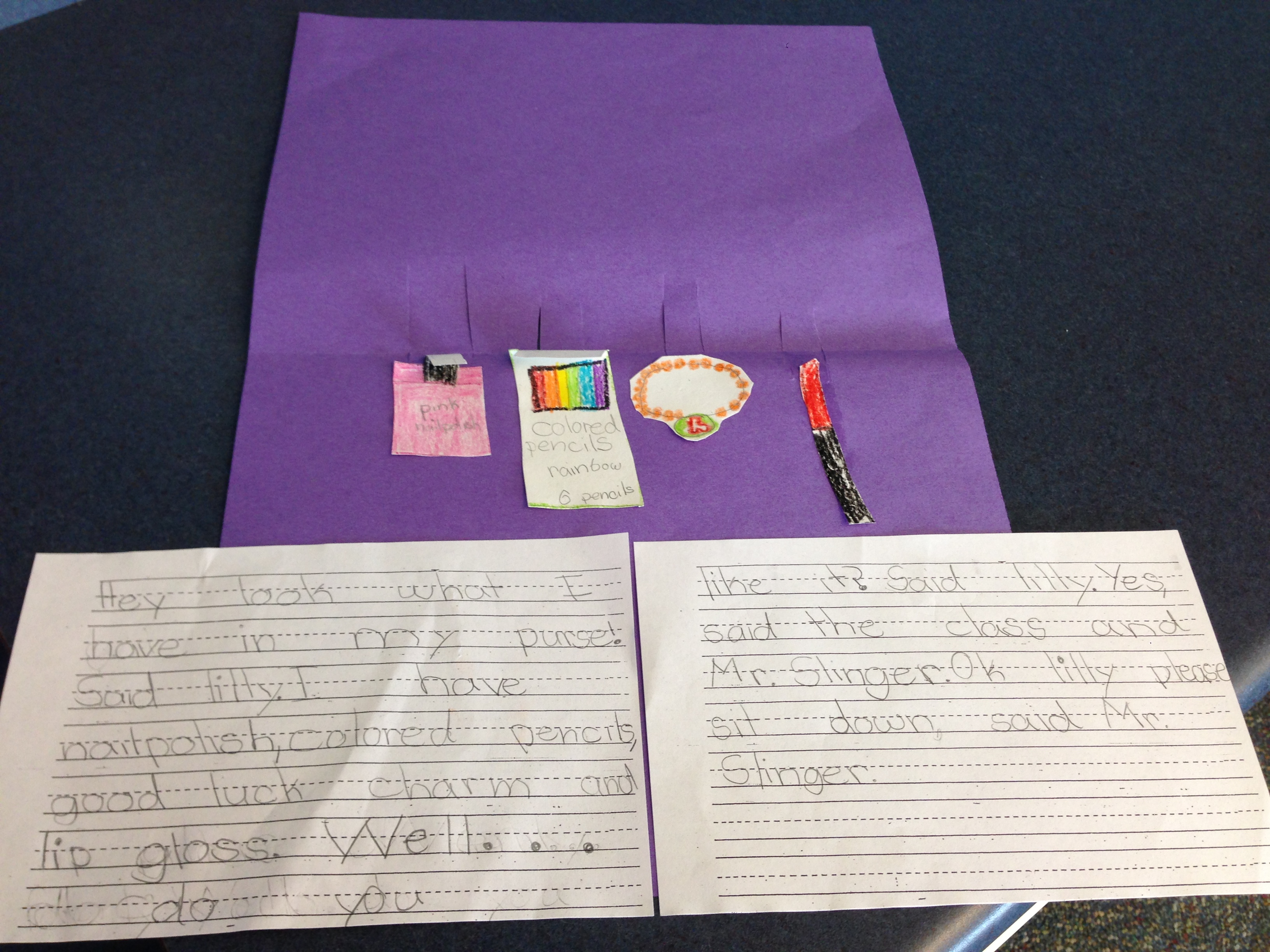
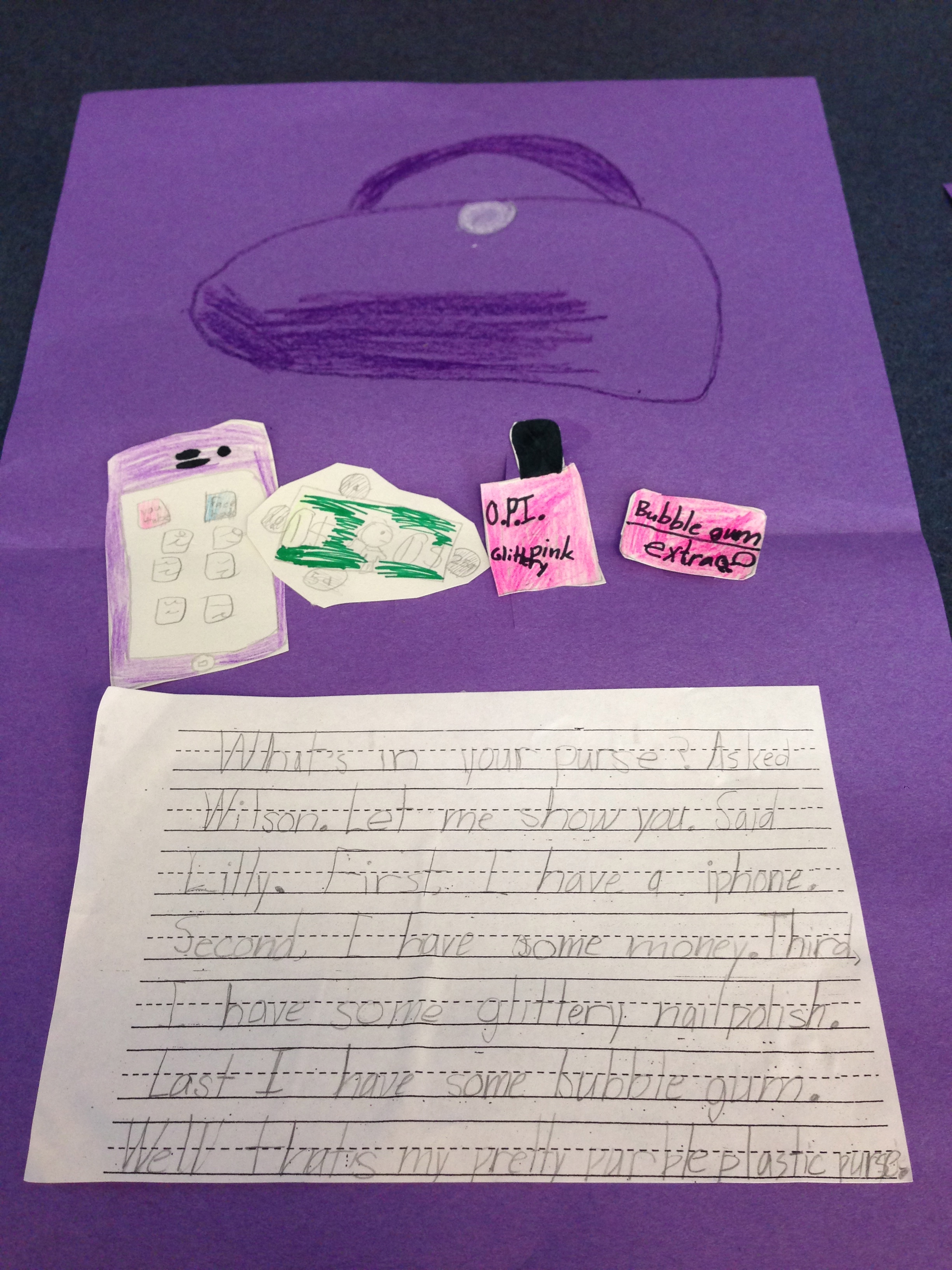
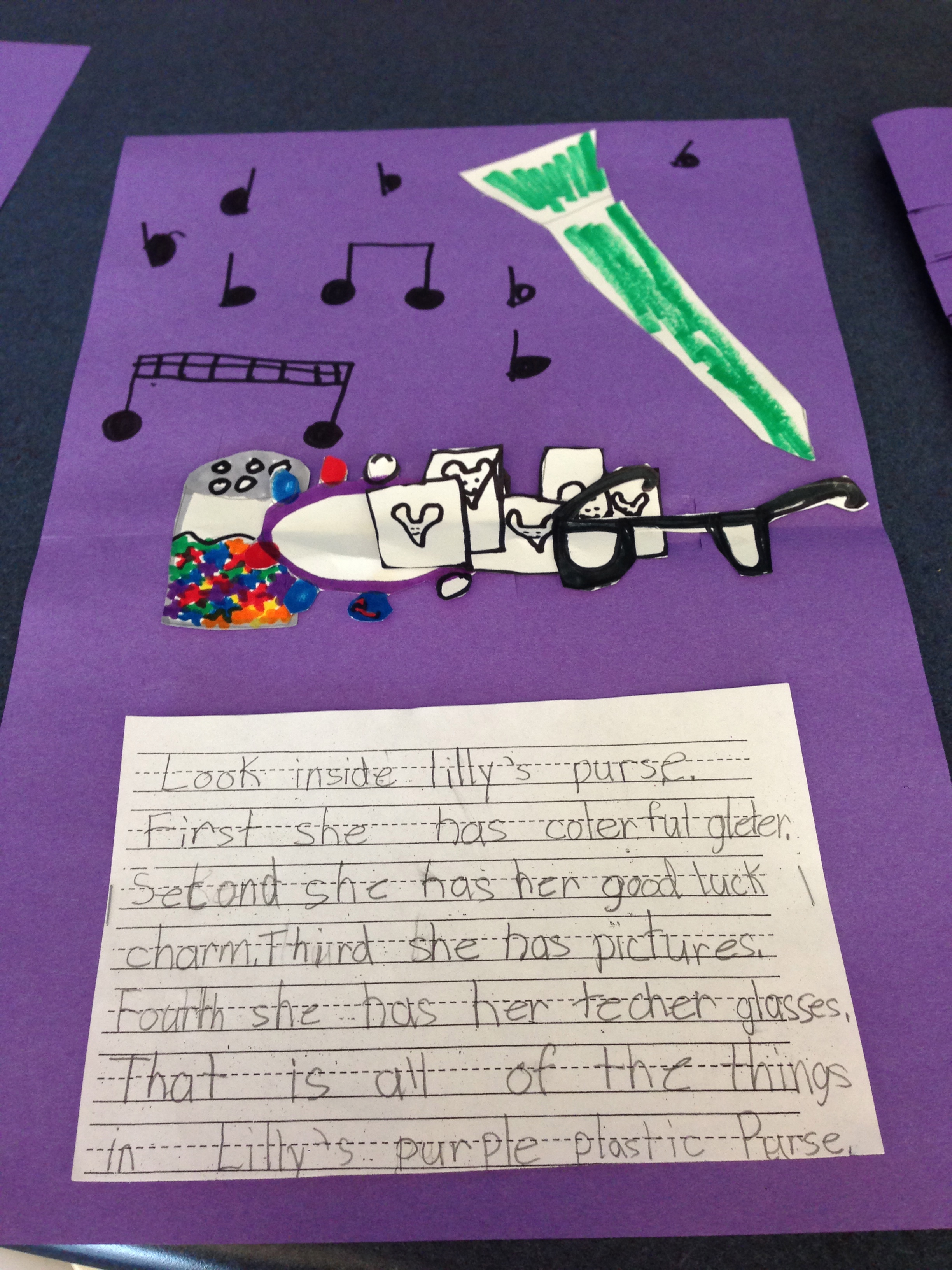
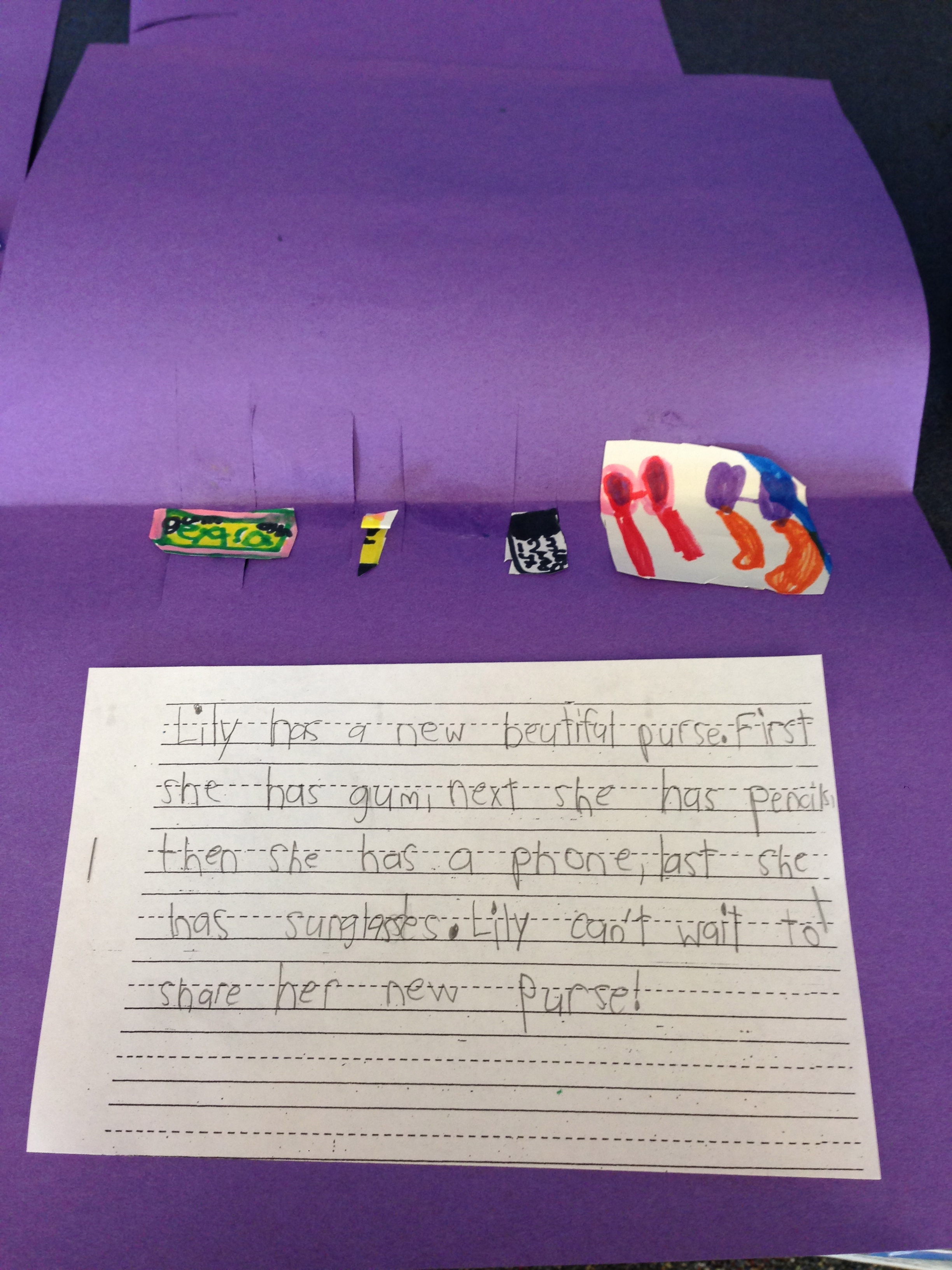
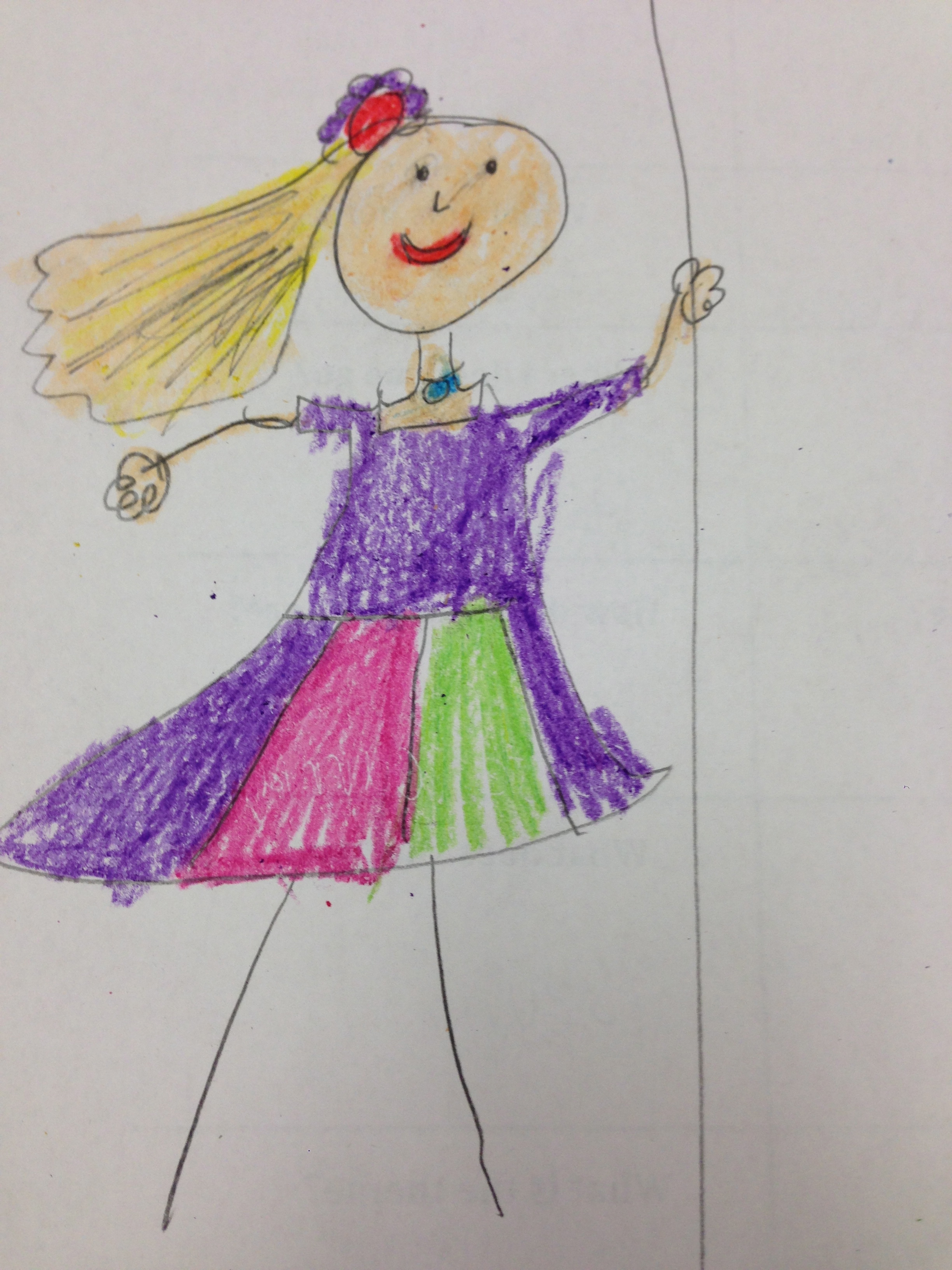
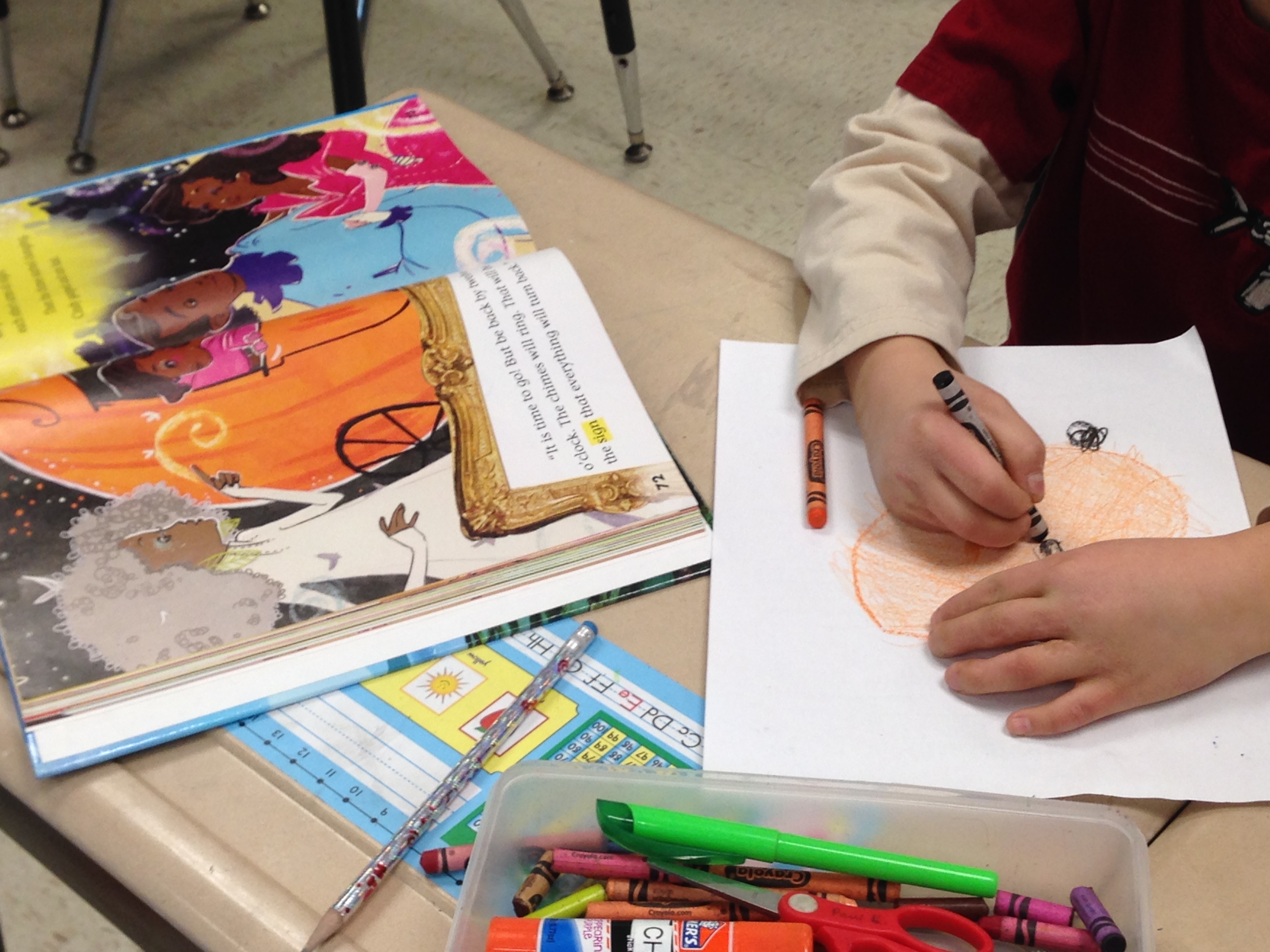
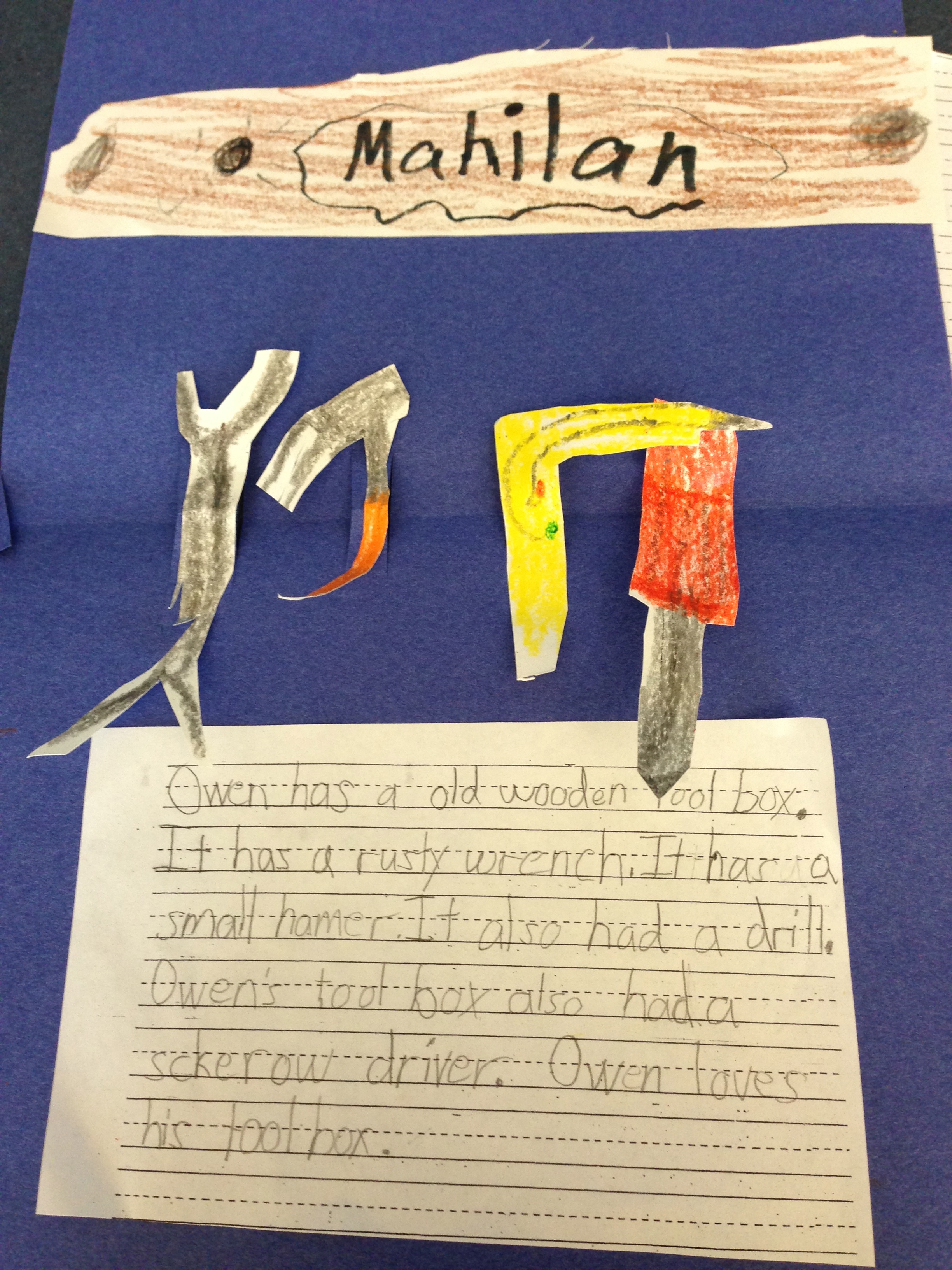
Last school year in first grade, we made Frosty’s Lunchbox, and I knew the project could be extended to other characters and ideas.  When planning for my summer school class, Write Like a Famous Author, I knew I wanted to do something with Lilly’s Purple Plastic Purse during our Kevin Henkes’ week.  I decided to have the students make and write about what’s inside Lilly’s purse; I also gave the students the option to crete what’s in Owen (or another character’s) toolbox or bag.

After reading aloud the story, we brainstormed what items could be in Lilly’s purse.  The students came up with a great list (they did such a great job cleaning up that they erased the board before I could take a picture!)  The students were excited about the project, but didn’t know where to start.  I modeled an example and we brainstormed possible topic sentences.  Then students got started and were very creative.  They worked at their own pace with writing and drawing pictures.  I helped them with cutting the purse and figuring out where to glue the pictures so they popped up.  It took them 1.5 class periods to complete (each class is 90 minutes) but it was worth it since they were engaged and worked hard.  I was pleased with the project turned out and am excited for more creations this summer!

IMG_0686 IMG_0687 IMG_0688
IMG_0689 IMG_0690 IMG_0691

Building a Diorama

Leave a comment

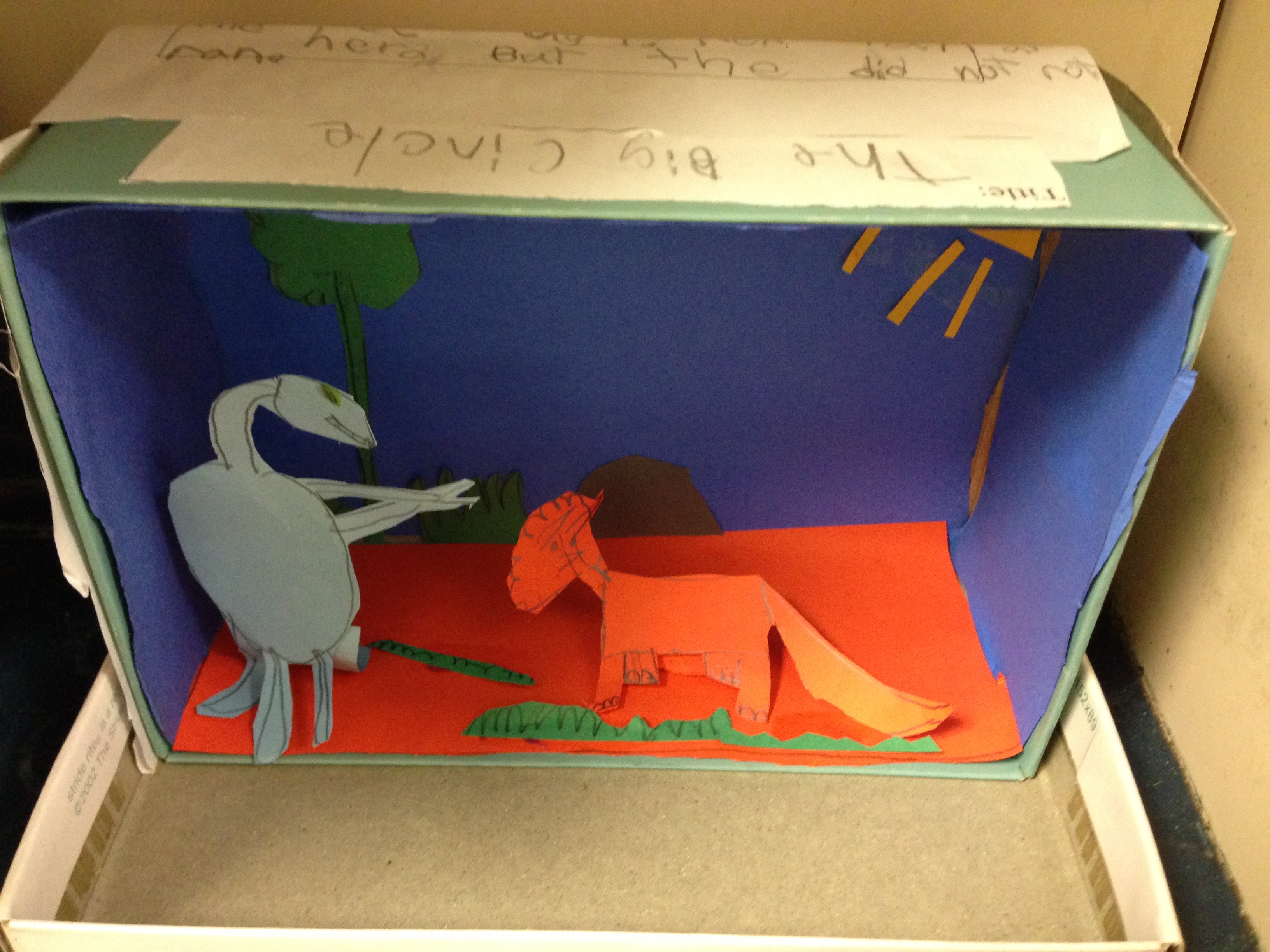
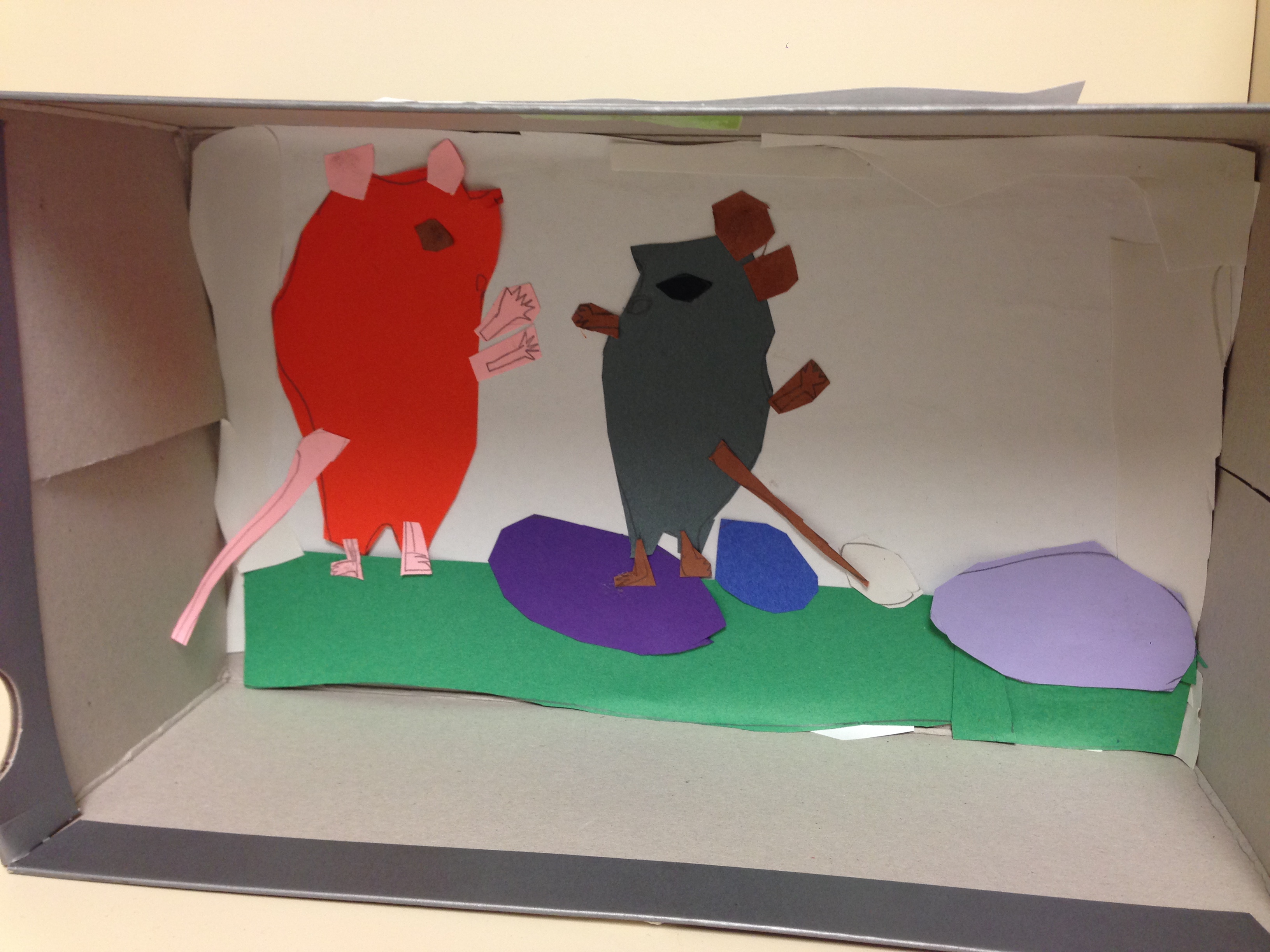
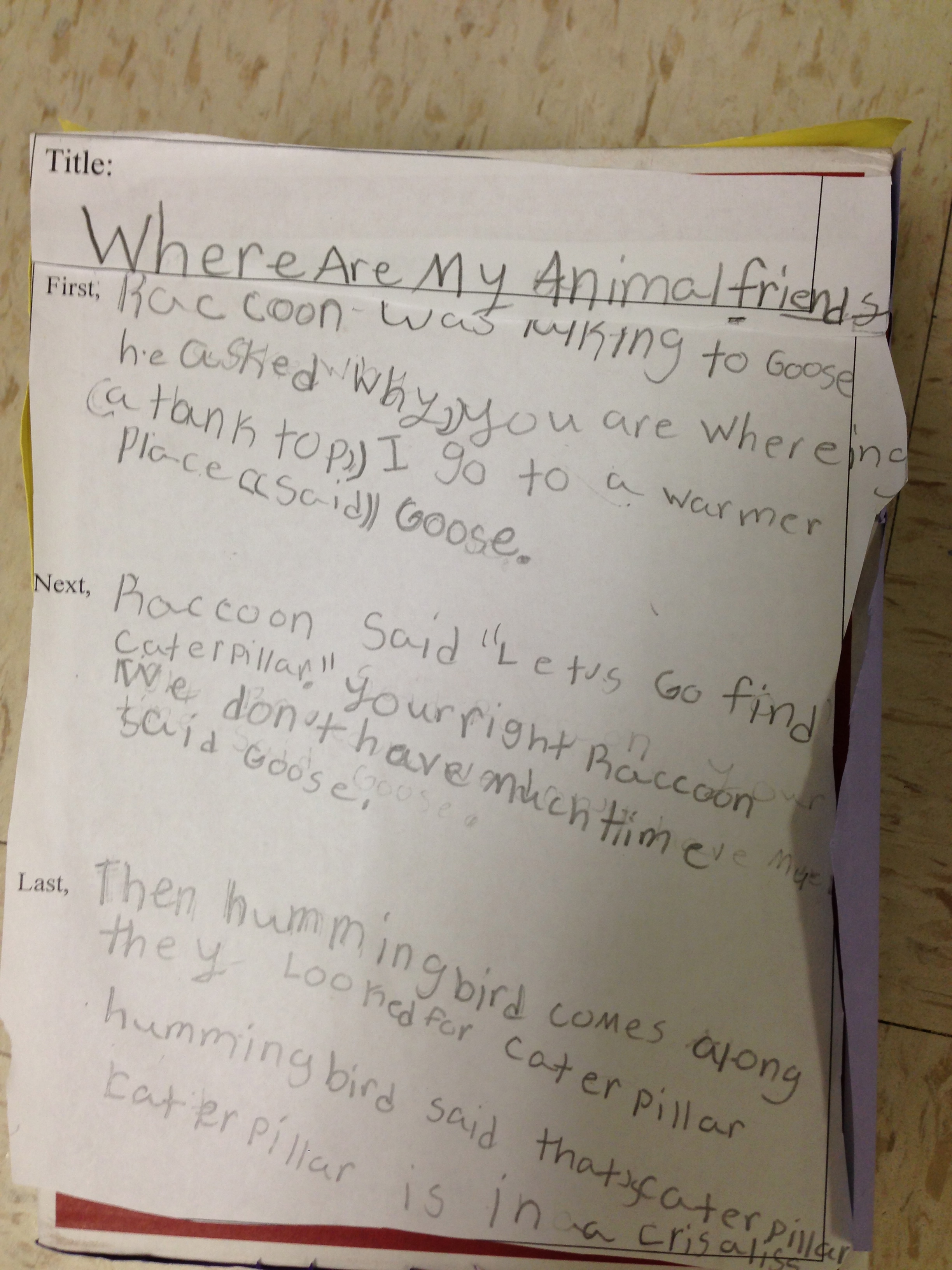
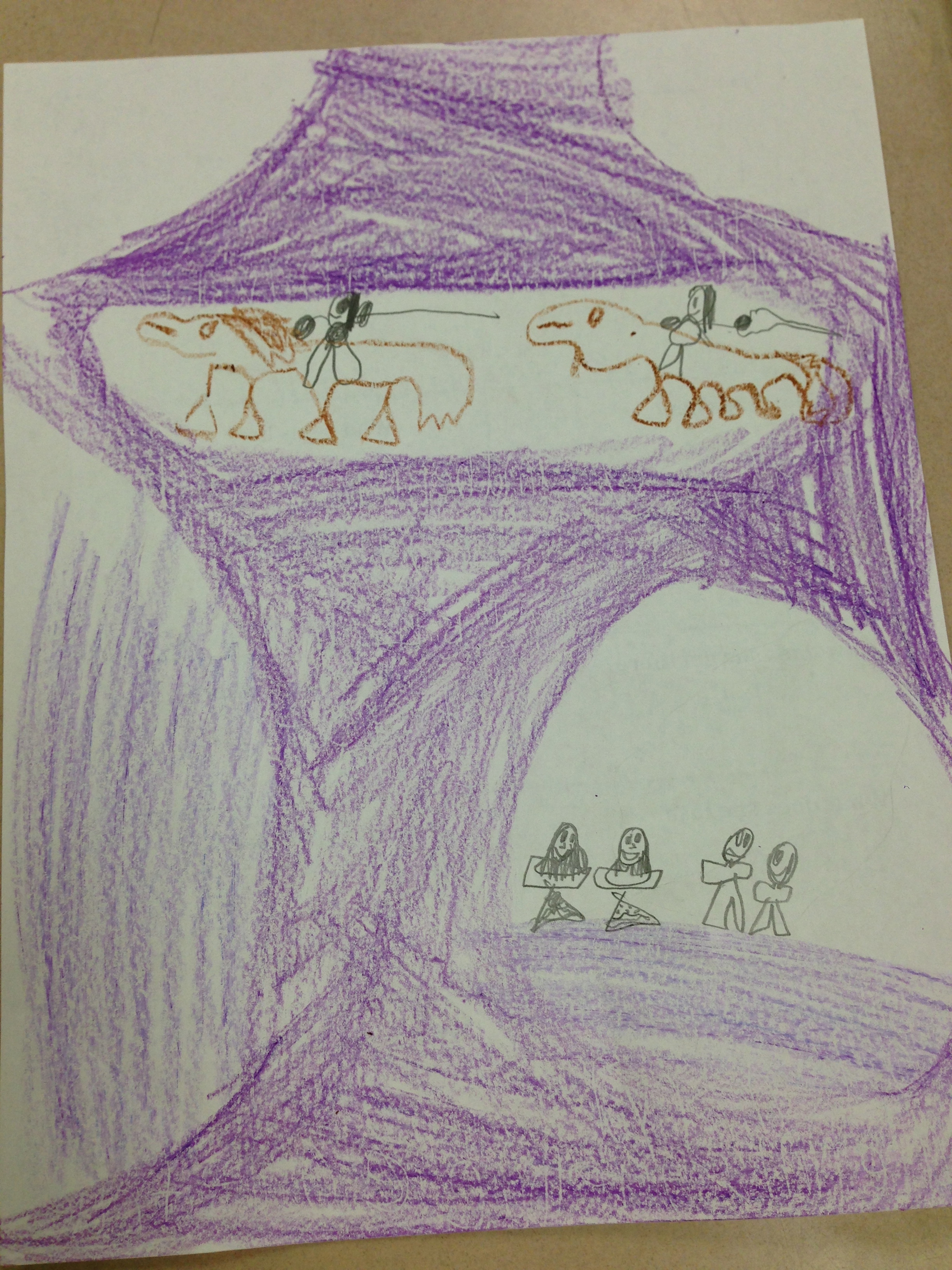
As a fun concluding reading activity, we had the students create a diorama of one of our reading stories.  They picked their favorite story from the year and chose one scene to recreate.  I also created a simple rubric and a place for them to write the title, genre, and sequence of events of the story.

Students enjoyed being creative and designing the characters and setting.  They needed to use a lot of details, which helped some of them take their time and show their artistic side.  This project was challenging for those students who are not as strong in creativity, but it was a good experience to expose them to thinking outside the box.

This was a multi-day project, but the students really enjoyed it.  It took a lot of work to create the diorama and write about it!  This was a good, culminating activity for the students to demonstrate what they’ve learned throughout the year about all the literary elements.  A lot of choice was involved in picking the story and deciding how to best represent it.  The sequence writing was also a good way for students to use a lot of details to describe what happened in the Beginning, Middle, and End of their story.

After the dioramas were done, students did a gallery walk around both classrooms to share and see others’ work.  I was very impressed with their creations and would love to have students build dioramas again!

IMG_0649 IMG_0651 IMG_0652
IMG_0653 IMG_0656 IMG_0657
IMG_0654 IMG_0658

What Are You Saying??

Leave a comment

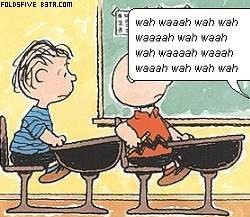
peanuts_veil-e1274891657170With 15 days of school left, we got a new student in our class.  Not only is it hard moving to a new school so close to the end of the school year, but she also came from Mexico and does not speak English! It’s like being in a Peanuts classroom all day long-all you hear is “wah wah wah wah!”  Luckily we have a couple ELL students who speak fluent Spanish, and one girl quickly became her buddy.

The first day she walked into the classroom, she was shaking with nerves.  All the students were great-very welcoming and friendly.  They greeted her with Hola!  The really wanted to include her and be her friend.  We told them to give her some time to adjust and not overwhelm her; the best thing they could do was to show her with their actions what to be doing in the classroom.  And on the playground, they could definitely all play together!

It has been fun watching her relax and begin to participate.  She can complete some assignments by copying and practicing English words.  She is able to do basic math.  We found a couple Spanish-English apps on the iPad, and she can listen to Spanish books on TumbleBooks.  While she isn’t talking verbally in the classroom (she has spoken to a friend and small group with the ELL teacher), she does smile and want to be included.

This goes to show when you have a strong classroom community, the children are very supportive of each other and their differences.  And that is extremely rewarding to watch.

Exploring with Technology

Leave a comment

As the year winds down, we’ve started exploring-it’s the perfect time to learn new technologies and figure out the kinks so we can implement them at the beginning of next year.  Students love using the iPads, and it has helped them stay motivated at this time of the school year.

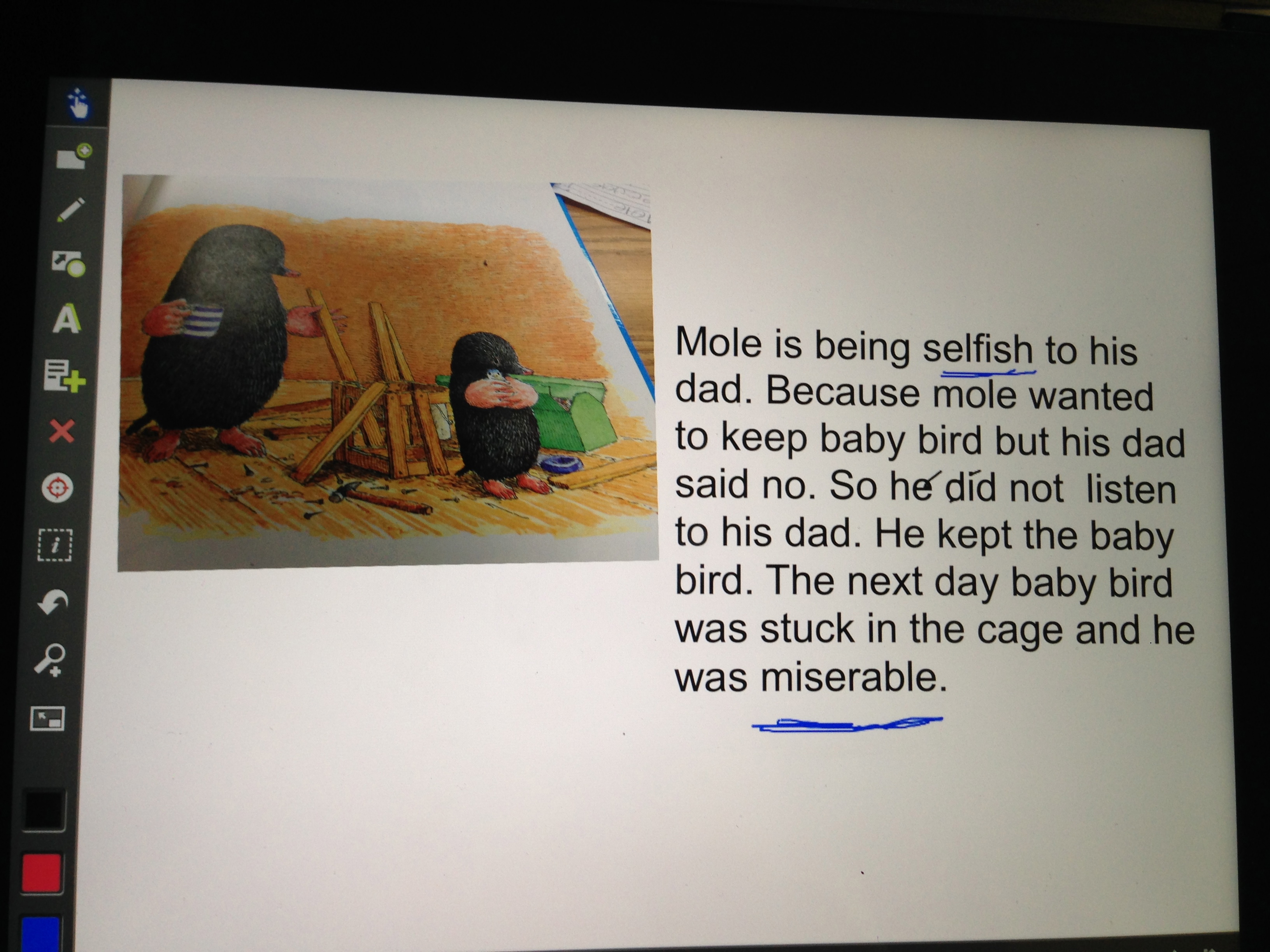
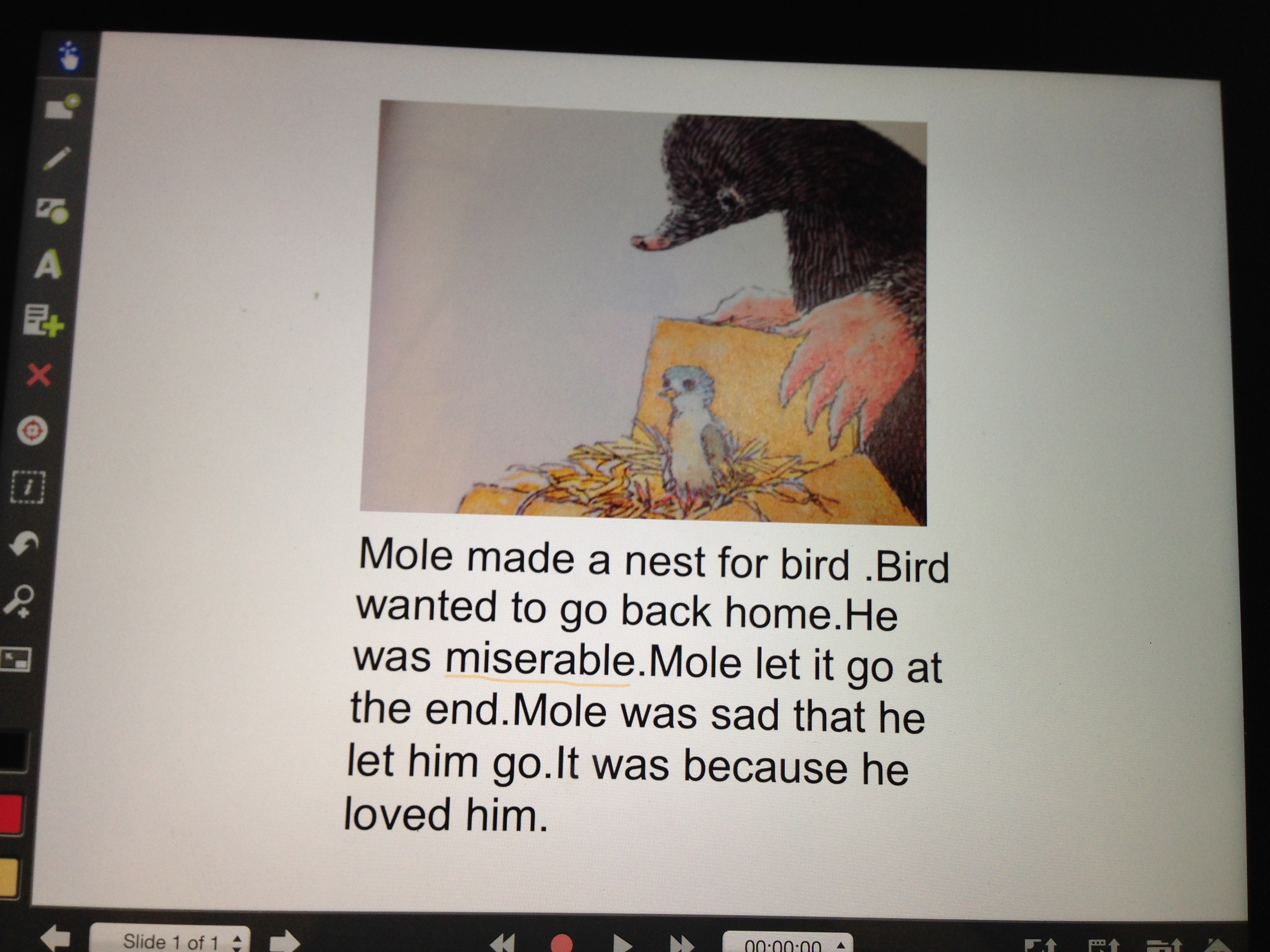
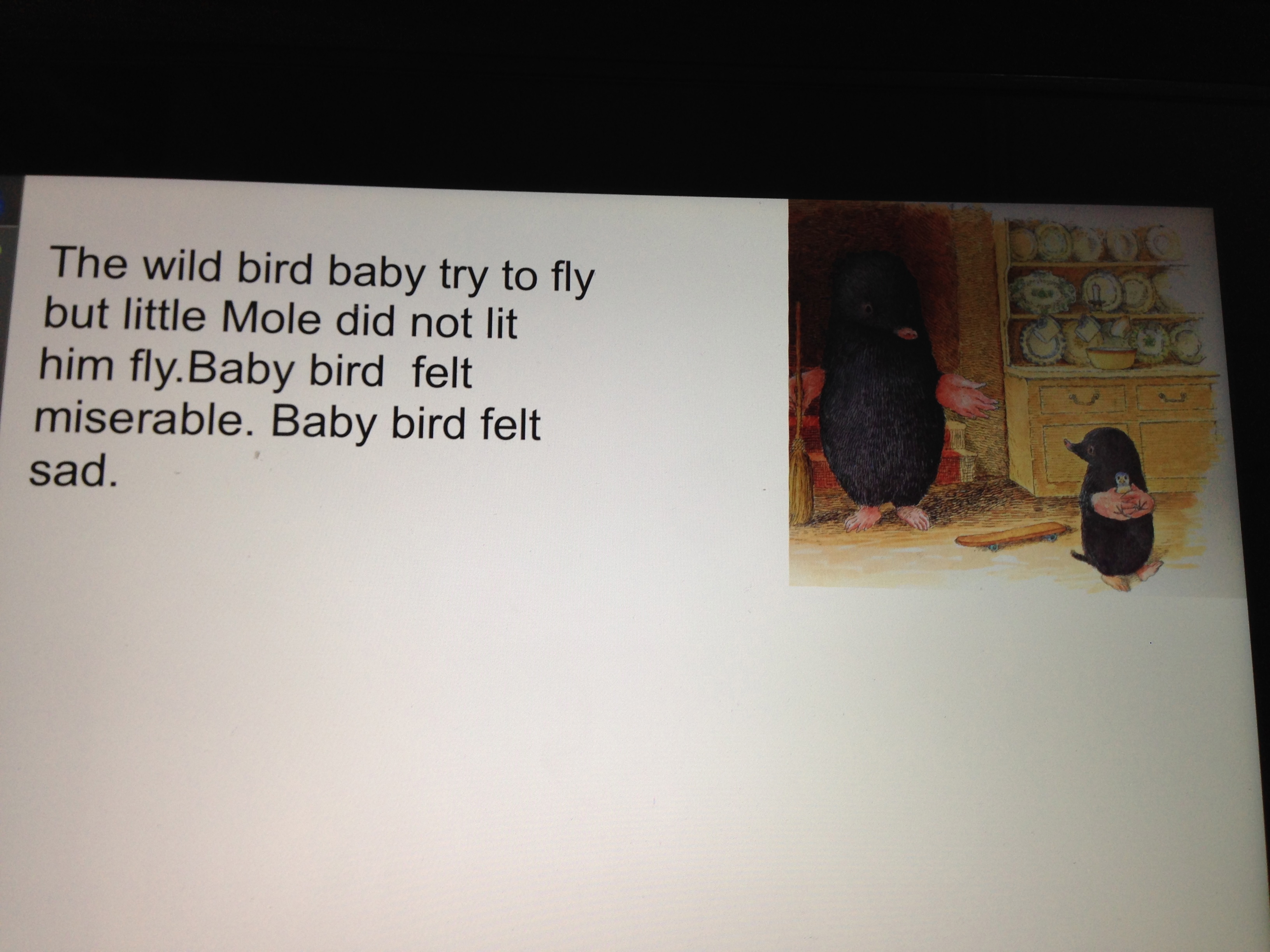
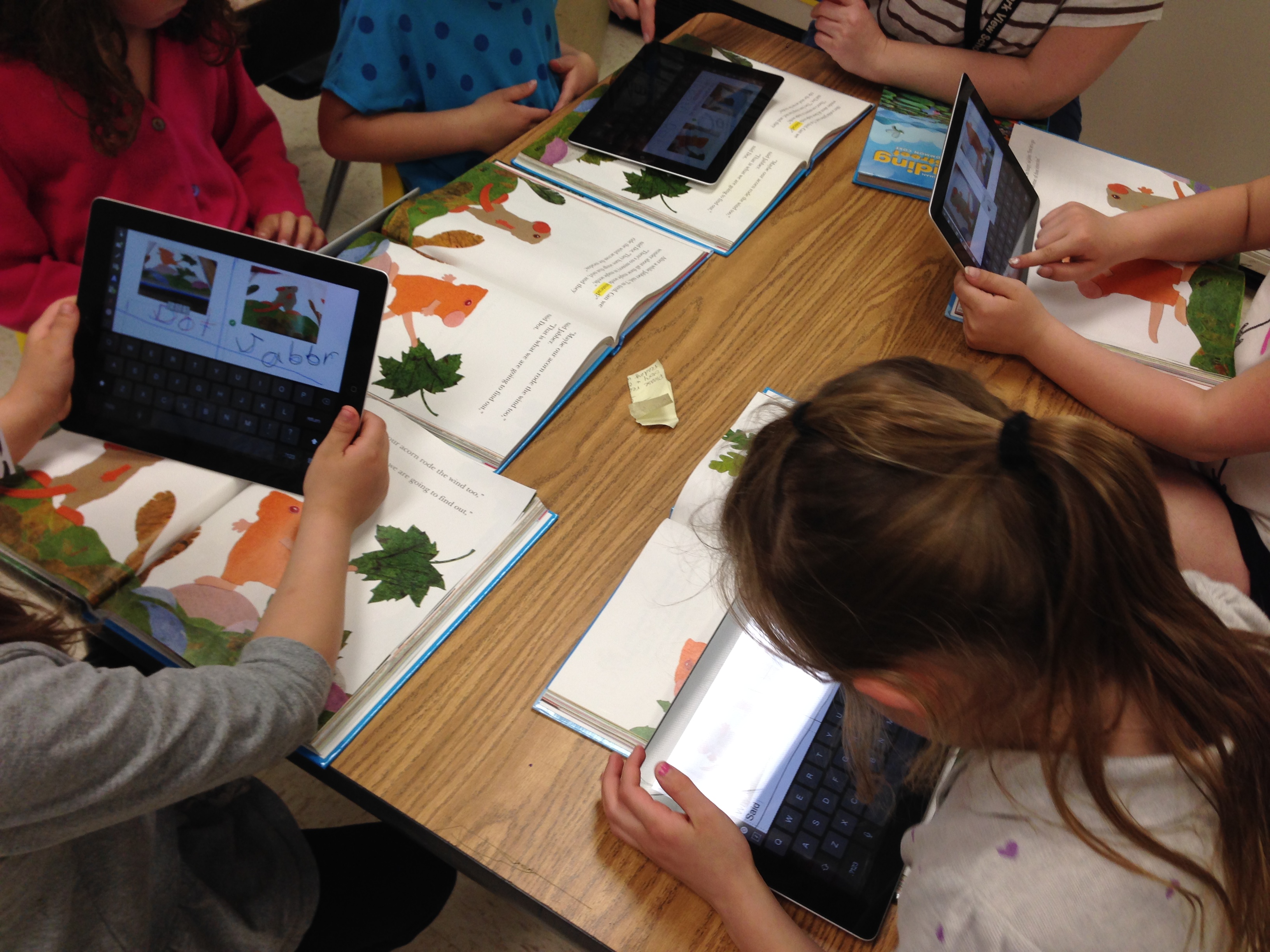
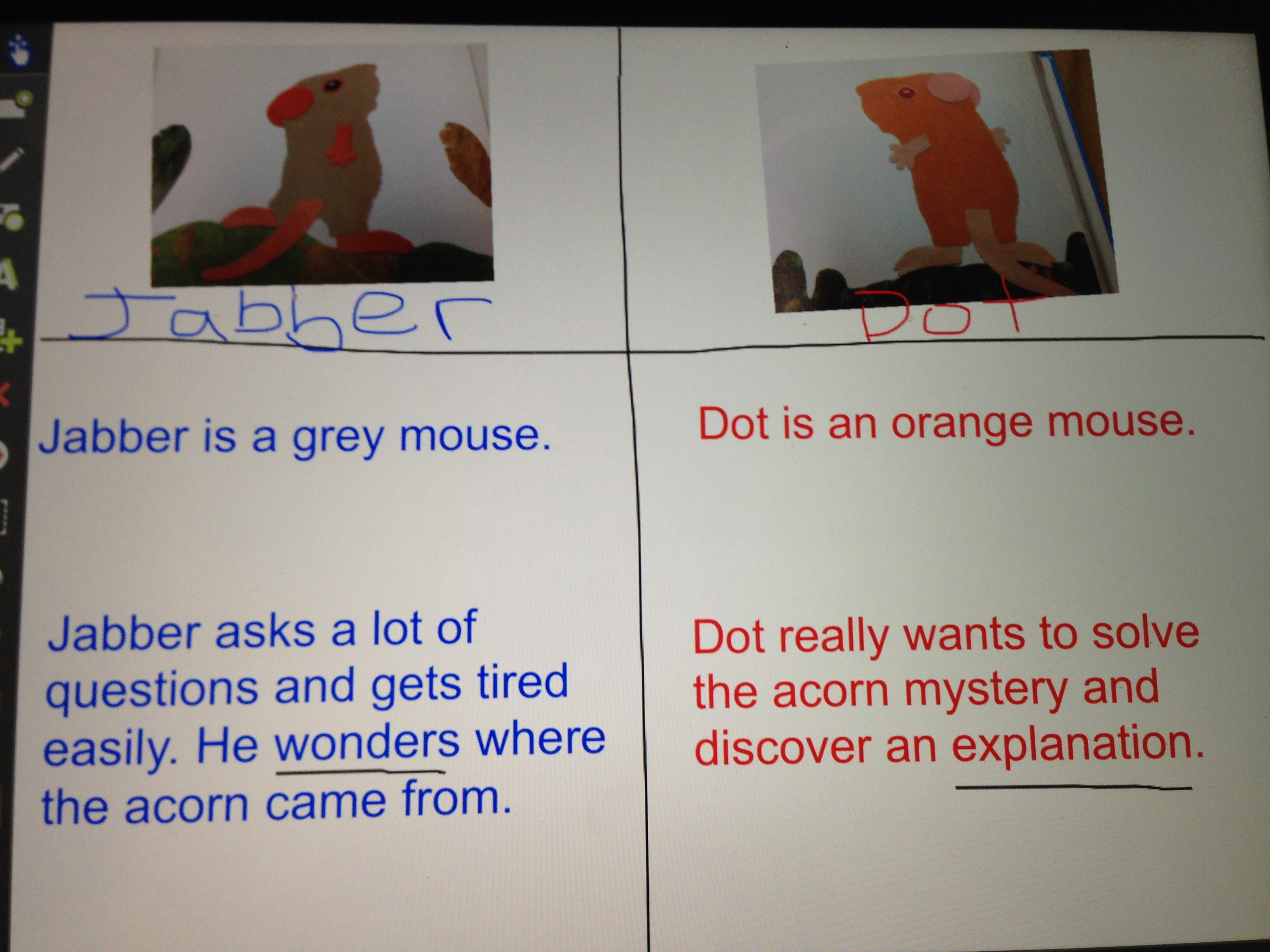
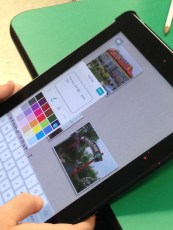
The app we focused on is Explain Everything (though you do have to purchase it).  We tried it at the beginning of the year during math, but now we’ve been using it for reading strategies.  Students can write and show what they’re thinking in a more engaging way.  Explain Everything is a great tool because it allows you to go back into your project and continue at a later point, which has been helpful as students learned how to use the app.

I explored the app-how to use it and some features-so I was prepared to teach students how to use it.  So far, we have used the app for 2 reading skills: Drawing Conclusions and Compare and Contrast.  Students first chose a picture from their weekly story to use to show their thinking.  They wrote out their sentences, for example, what happened in the picture and what their conclusion was.  We increased the challenge by having them use an amazing vocabulary word.  Separating the writing from the app helped them focus on each part of the project without overwhelming them.

We demonstrated and taught the app during guided reading groups.  We showed them how to take a picture, resize it, and add text.  After showing them the basic features, they were able to create their own project fairly independently.  They caught on quickly to how to use the app, and they wrote amazing sentences.  As they get better at the app and explore it more on their own, they can figure out how to change the text color, label pictures, underline vocabulary words, and record their writing.  We can extend their projects by adding more pages, so they can have all their work in one file or show multiple parts of the same story.

I know there’s more to learn about the app, but I’m excited to start using it, and the students are excited to try something new.  At EdCamp Chicago a few weeks ago, a lot of people mentioned using the app in the elementary classroom.  Also, Shawn McCusker (@ShawnMcCusker) described all the different ways he and his students use Explain Everything in the classroom.  I’m amazed by the different ways it can be incorporated into all concepts in the curriculum.  So far I’ve done math and reading comprehension.  I can’t wait to try more ideas and am open to suggestions.  I’d love to see others’ projects and ideas!

IMG_0565 IMG_0564 IMG_0563
IMG_0592 IMG_0591 IMG_0562

Principal’s New Clothes-First Grade Style!

Leave a comment

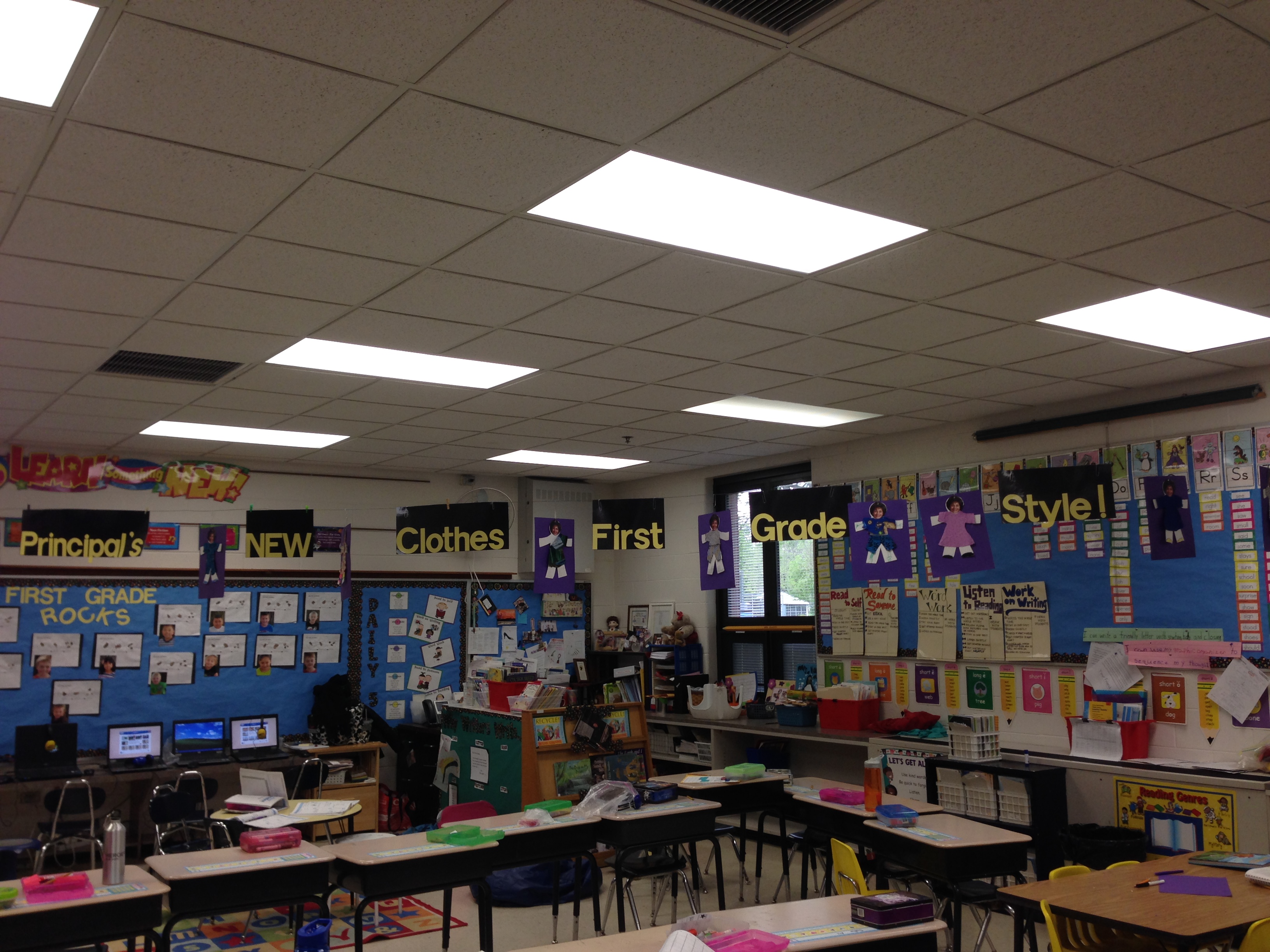
IMG_0601To help students write creatively using many details, we decided to do a fun project.  Especially at this point in the school year, it’s important to create engaging activities that allow students to combine and practice what they’ve learned as their minds wander outside to the spring weather.

After reading the book, The Principal’s New Clothes, students had the task of designing a new outfit for our principal.  Students picked out fabric to create a dress, blouse, skirt, or pants (note: the project requires a lot of prep work creating the paper dolls and cutting the clothes from the fabric) that they glued onto their doll.

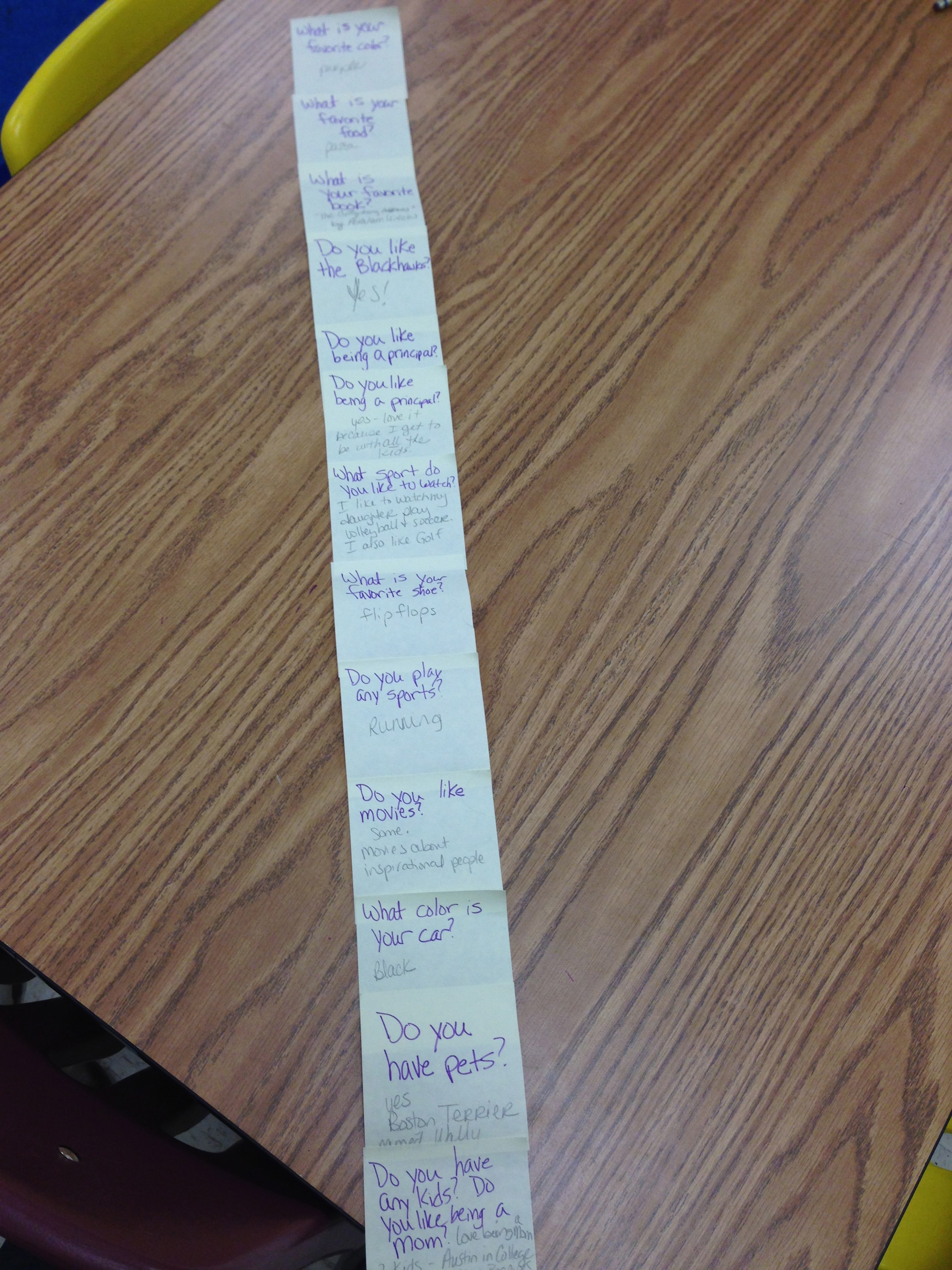
This project worked perfectly with our skill of main idea and details as we discussed the writing part of describing our principal.  We brainstormed a list of questions we wanted to know about our principal.  After writing the questions on post-its (what’s your favorite color, do you like being a principal, do you have kids, etc) we sent them to the office and awaited her responses.

The kids were very excited she responded!  I shared the responses and we discussed how to turn the questions into sentences.  We also discussed using lots of details and descriptive word choices.  Students then went off and wrote.

IMG_0595This was a fun activity-the students have really grown as writers this year and had the chance to be creative.  And the principal definitely has some cool new clothes!


Lessons from Yoga

Leave a comment

yoga-alliance

In the past year, I’ve become an avid yoga enthusiast.  I only practice 1-2 times per week, but when I get in that zone, it is a true destresser.  Sometimes it’s hard for me to clear my mind, but after class I always feel so much better.  And if my mind begins to wander, I lose my focus and fall out of poses!  I’ve also used the breathing techniques to help me calm down in daily life events.  As I’ve increased my practice, I’ve also realized lessons from yoga that can be applied to daily life and the classroom.  Below outlines lessons we can bring into our daily lives.

  • Yoga is differentiated-everyone has different abilities and is at different stages of their practice and that is okay.  There are different options with the poses that the instructor shares, and you get the choice of how far to go based on your flexibility and level.  There are tools to use, such as a block or strap for additional support so you can try a more advanced option.  Also, you are focused on yourself rather than comparing to others around yourself.  Yes, I do look around, in awe of people who can do crazy balances, and know I am not there yet.  And that is okay.
  • Throughout yoga, you are focused on yourself and your breath.  You use this breath to help you push through poses.  Any other thoughts are pushed to the wayside.  Throughout the class, you take moments to return to your breath to regain focus or slow down after a difficult sequence or pose.  If you struggled, this is a chance to regain neutral ground and keep going.  This is why yoga is seen as a stress relief and confidence booster.
  • At the beginning of each class, an intention is set.  Sometimes the instructor gives you a suggestion, sometimes you create your own.  Usually these are a word or a phrase, the reason you decided to come to class that day.  Imagine if everyone woke up and set an attention to try their best, listen to themselves, appreciate the world, or be awesome everyday!
  • Yoga is about growth.  Each class you can push yourself further or try something new.  Over time, you gain strength and can notice the difference.  Then you can set new goals.  There are poses I am doing now that I didn’t think were possible for my body to do; one day I decided to try and succeeded!  It was such a wonderful feeling of accomplishment and helped my confidence grow.  The worst thing that happens, is you fall out of a pose; then you try again.  I watch others who have succeeded and have something to aspire to as I gain more strength.  Also, the instructors are very supportive-they offer feedback throughout class and are willing to help and assist if you want.
  • At the end of class, time is spent to relax and recover; often, everyone breathes together as a community.  In her closing remarks, the instructor says to leave what happened on the mat.  Throughout class she also says to listen to your body-some days you may be capable of doing more than others, but what is important is you came to class and gave effort.  Everyone worked their hardest and deserves the chance to revel and take in that moment.

As I continue my practice and build strength, I hope to also bring these lessons into other moments of my life.

Namaste!

Who doesn’t love receiving a letter?!

Leave a comment

Who doesn’t love receiving a letter in the mail?!  Letter writing is still a valuable, authentic learning experience in the classroom.  It teaches students how to effectively communicate their thoughts into writing.  It gives students a purpose for writing.  And they eagerly wait for a reply!

In each teaching experience I’ve had, letters have been included and provided an authentic, meaningful experience.  Below outlines some of the activities I’ve done and I know the list can be expanded.

  • Second grade students learned how to write letters around Thanksgiving time.  They had to choose a teacher at school to write a letter to saying why they were thankful for that person.  I was lucky to receive a few!
DSCN9519 DSCN9518 DSCN9517
  • Second grade students learned how to write letters while learning about government leaders.  As a class, we wrote a letter  to the mayor that I emailed to him; he wrote back!  I then planned an assembly for him to come answer some of their questions.  Students also each wrote a letter to President Obama asking him questions and telling him something they were learning.

letter to mayor


  • First graders learned how to write letters and each wrote a letter to their parents.  Using a class email account, they typed their letters and sent them.  They wanted a reply, and their parents sent very sweet ones.  We checked the email account a few times during the day and read aloud the replies.  Both the students and their parents loved this!
Screen Shot 2014-04-08 at 5.13.31 PM Screen Shot 2014-04-08 at 5.12.49 PM Screen Shot 2014-04-08 at 5.11.59 PM

Everyone loves receiving mail.  Writing letters gives students a positive, authentic experience, and they love when they receive a reply!  I want to continue letter writing in the future, possibly virtually or with pen pals.  What are other ways you have used letter writing?

Creating Community Collages

1 Comment

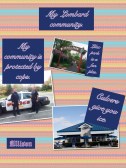
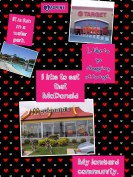
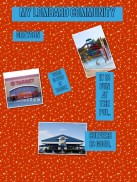
The technology specialist wanted to introduce a new app to the first grade students: Pic Collage.  We brainstormed what would be a good subject based on what students were learning.  Remembering that we were discussing communities, I suggested create a collage about things they can find in their community.  We decided that students would have to choose 3 things in their community to create their collage.

As a class, we brainstormed different things that are in our community.  I wanted to make sure students had choices for their pictures, but we wanted some control so they weren’t searching on the open Internet.  We learned it’s important o be prepared and planning takes time because finding pictures for the iPads turned into its own project for me!  In the end, I had to search for and save pictures on one iPad, upload them to Dropbox, and then download them to the other iPads.  I’m not sure if this was the best method, but it worked.

In small groups, the technology specialist and I taught students how to use Pic Collage and it’s different features.  We provided assistance as needed as well as a word wall list.  The students quickly learned how to use the app and became independent workers.  They did a great job and wrote some great sentences describing what’s in their community.

IMG_0458  


IMG_0456

This is a great app for students to create fun projects showcasing different pictures, even ones they’ve taken.  We are already looking for another way to use this app again in our curriculum!

iPhone Image 4C607F iPhone Image 4C60F8 iPhone Image 4F2F35
iPhone Image 51D013 iPhone Image 56F921


Multicultural Cinderella

Leave a comment

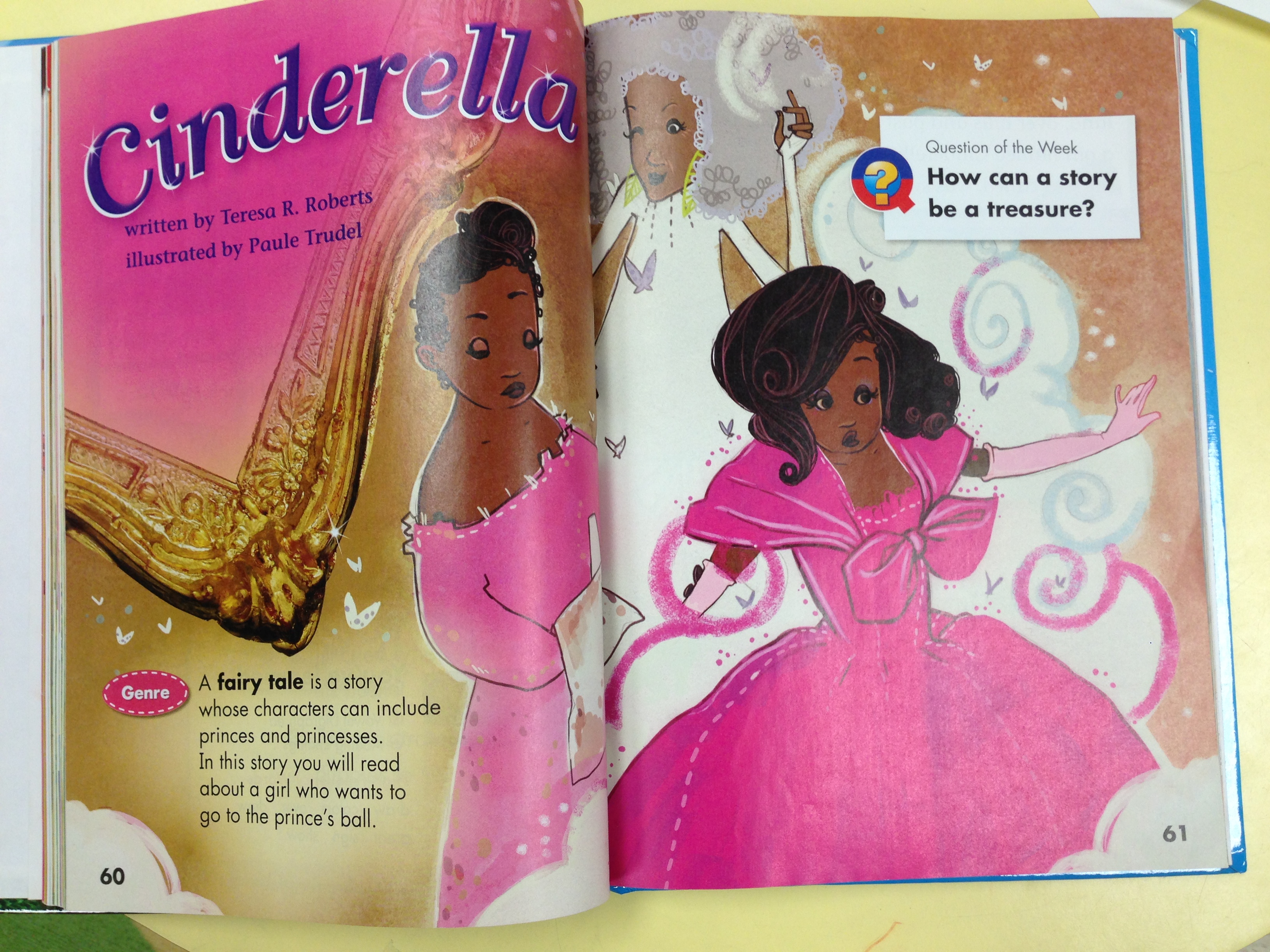
DSCN9987I love the story of Cinderella.  One of my favorite units to teach is multicultural Cinderella, using different versions of the story to help students learn about other cultures. The students enjoy hearing the stories and identifying the differences, yet similar themes. They also are a great way to spark discussions about our own cultures, traditions, and celebrations.

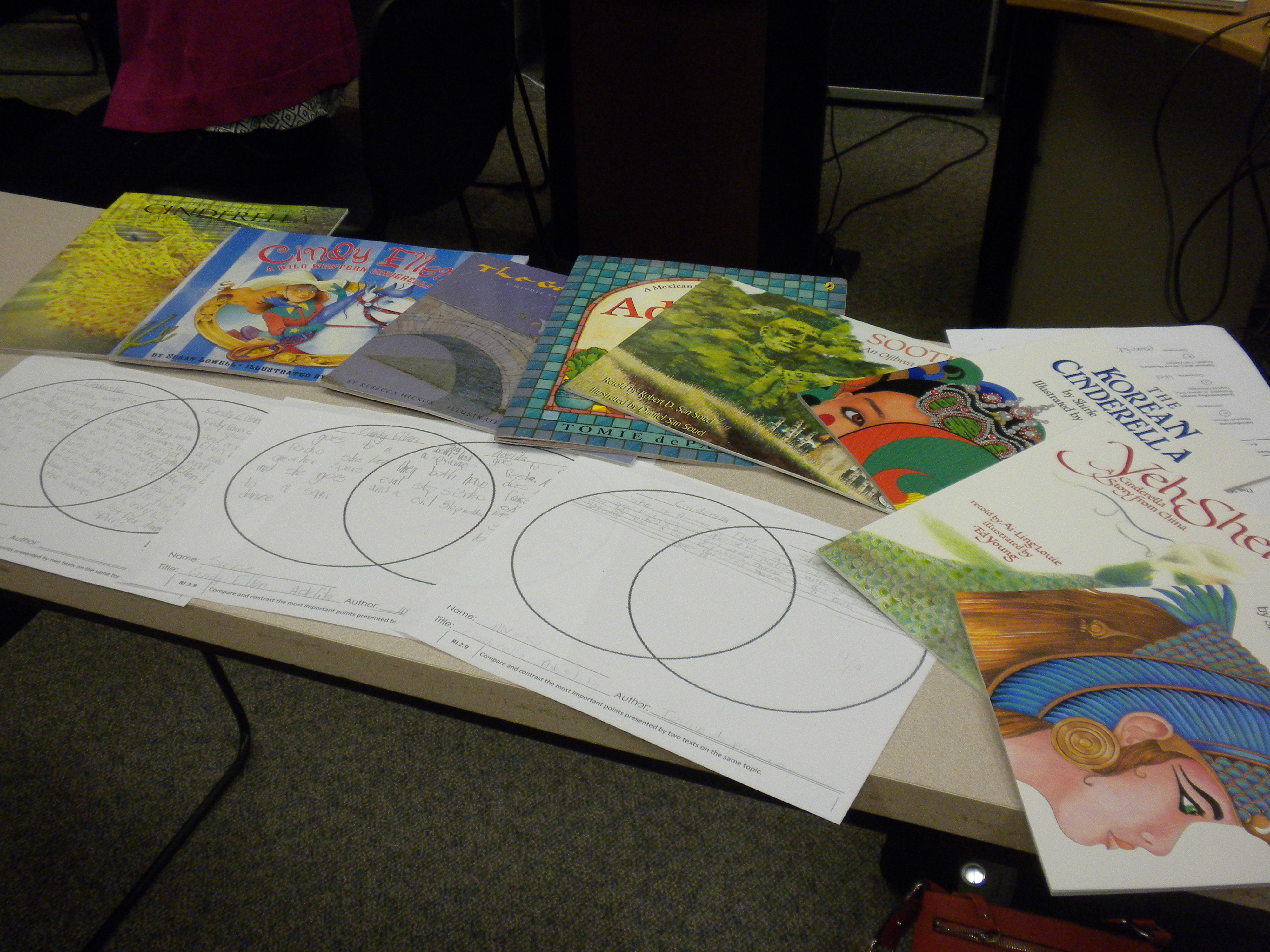
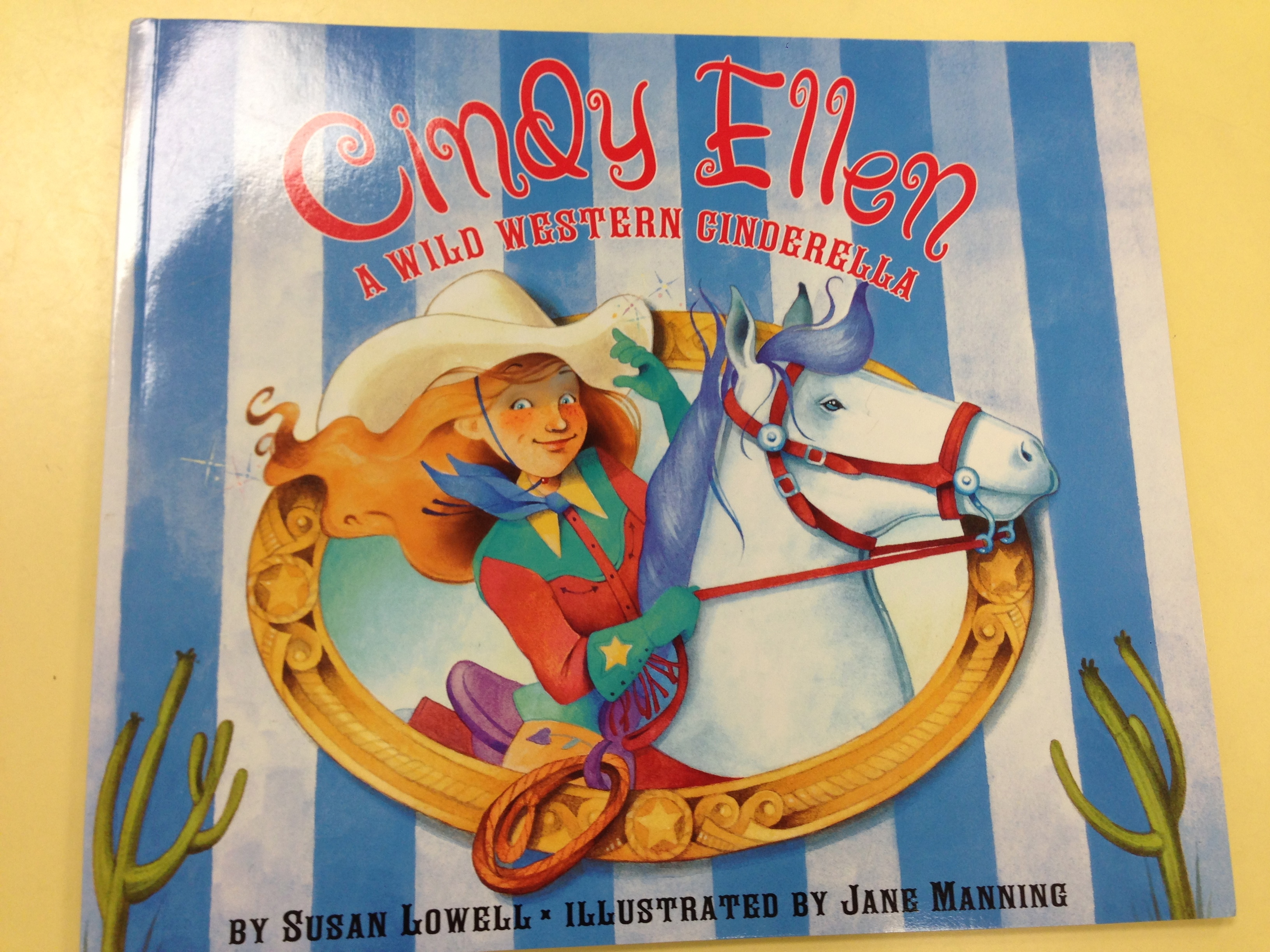
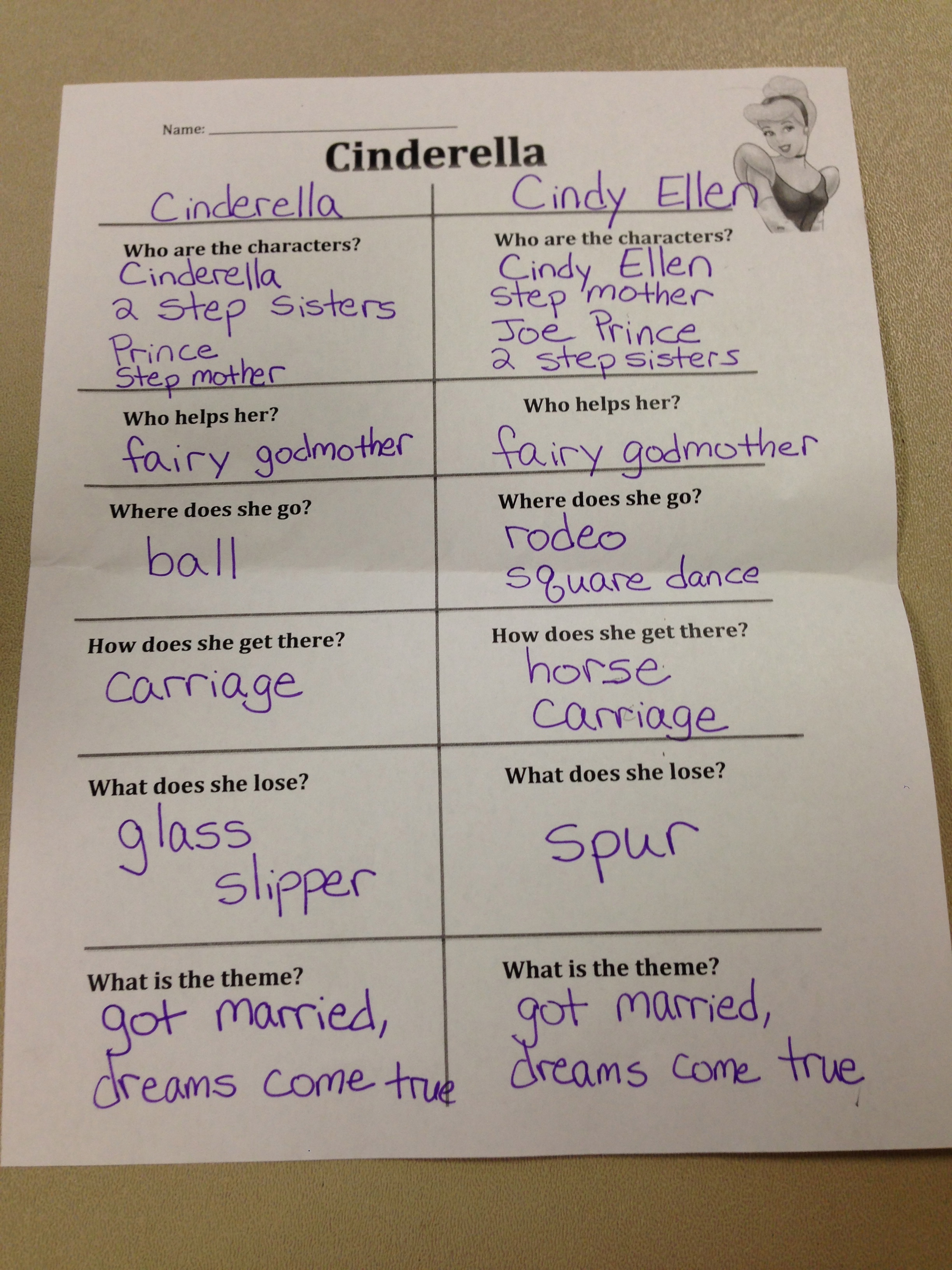
Last year in second grade, I did a mini Cinderella unit that paralleled our social studies unit about cultures.  Students had the opportunity to share about a family tradition they celebrated.  To practice the reading comprehension skill Compare and Contrast, I real aloud 4 versions of Cinderella-the original, Wild West, Spanish, and Middle Eastern.  After each story, we discussed the main story elements and compared different versions.  To end the unit, students worked in partners to complete a venn diagram; they chose which 2 stories to compare and contrast.  Students loved the stories and noticing the differences, especially with the fairy godmother, where the party was held, and what Cinderella lost.
IMG_0469 IMG_0468

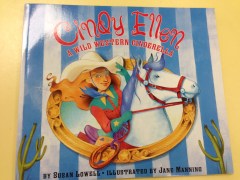
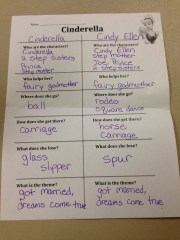
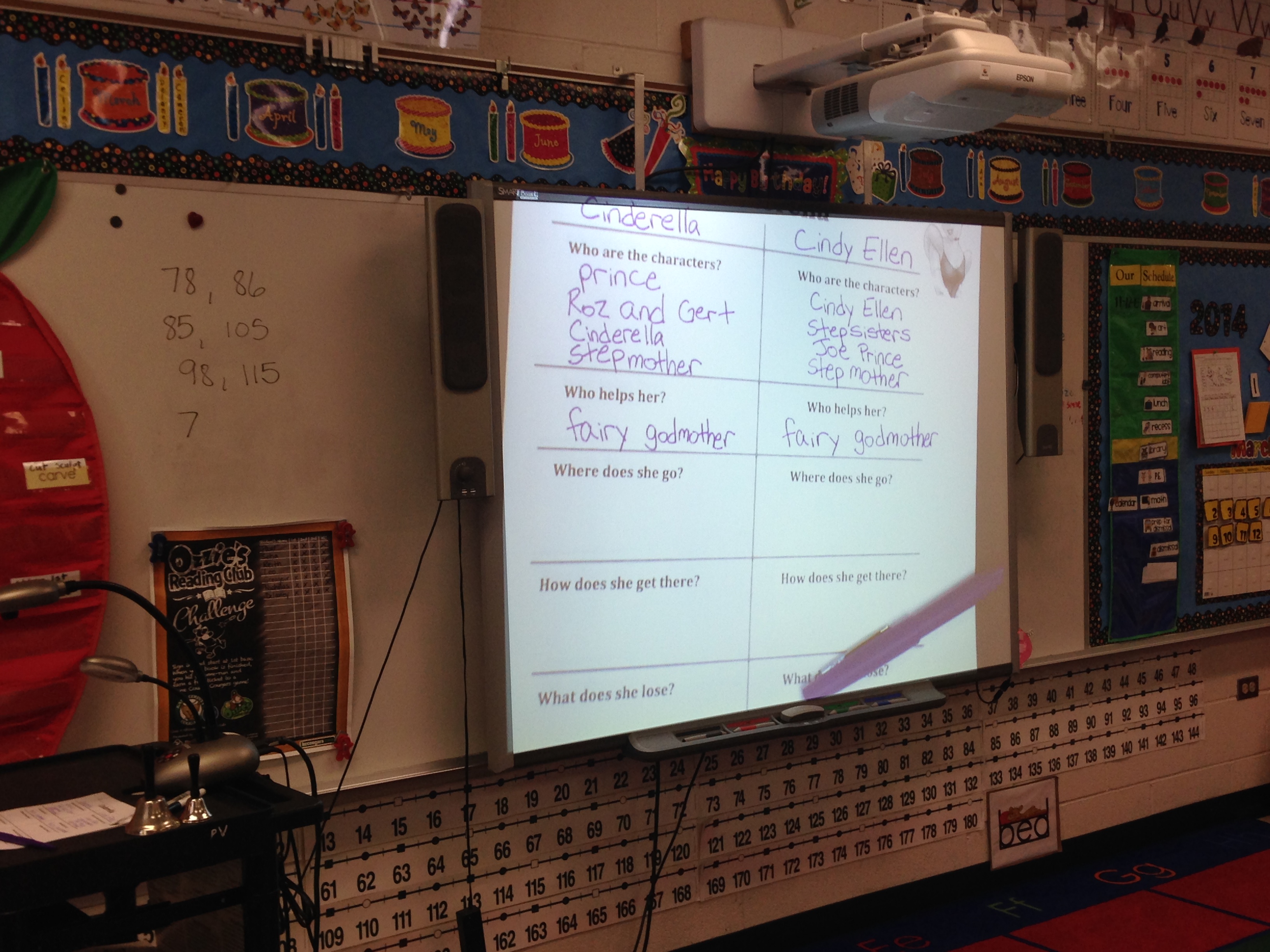
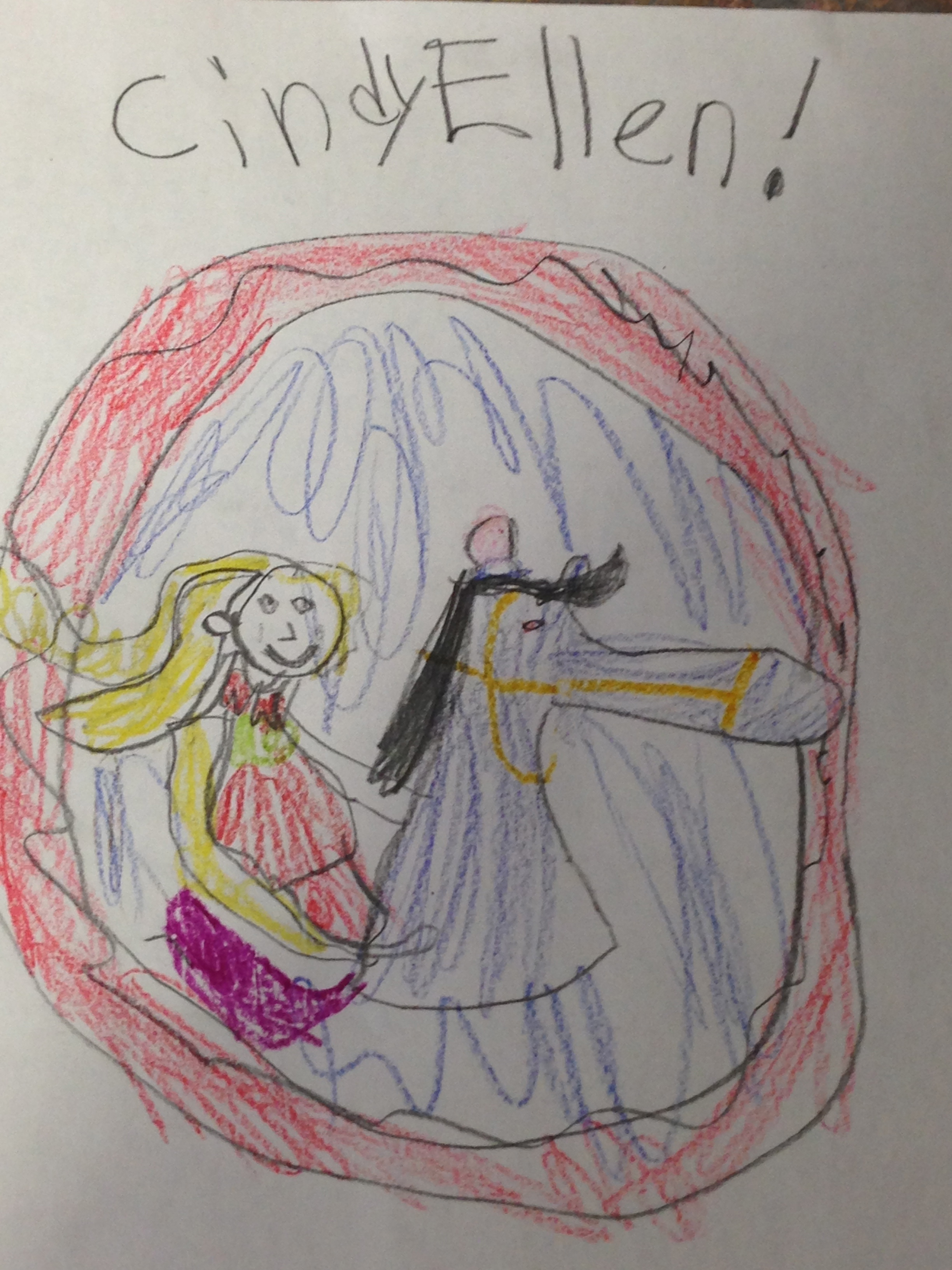
This year, one of the stories in the first grade reader is Cinderella, and I immediately asked if I could teach a lesson.  I had to figure out how to modify the compare and contrast activity for my first graders’ level.  I decided to use one story, and read others throughout the week; we completed a T-chart I created together to compare and contrast.  The story I chose was Cindy Ellen because it had clear differences; this ended up being a good choice as well because it engaged all students, especially the boys who weren’t too excited about reading Cinderella.  The students loved the story; they were laughing along with the crazy fairy godmother.  Even though it was a long story, the students were good listeners because they were able to identify all the similarities and differences when we completed our chart together.  After they finished, they drew a picture of their favorite part or character.
IMG_0462 IMG_0454

I think it’s very important to teach students about other cultures, and stories are a great way to do so.  Even though these stories had differences, they relayed the same message and theme.  And this unit gives students an opportunity to share about their own cultures and traditions, so we can learn from each other and build a stronger classroom community.

A multicultural unit about Cinderella could be extended and applied to all grade levels.  Older students could read harder texts and even research about other cultures.  In addition to reading the stories, students could write an invitation to the ball or a friendly letter to Cinderella or her fairy godmother.  Students could even write their own version of Cinderella-the possibilities are endless!  I hope to continue teaching this unit to all my students in the future!
IMG_0450 IMG_0451 IMG_0452
IMG_0464 IMG_0465 IMG_0466

What’s for lunch Frosty?

Leave a comment

IMG_0438

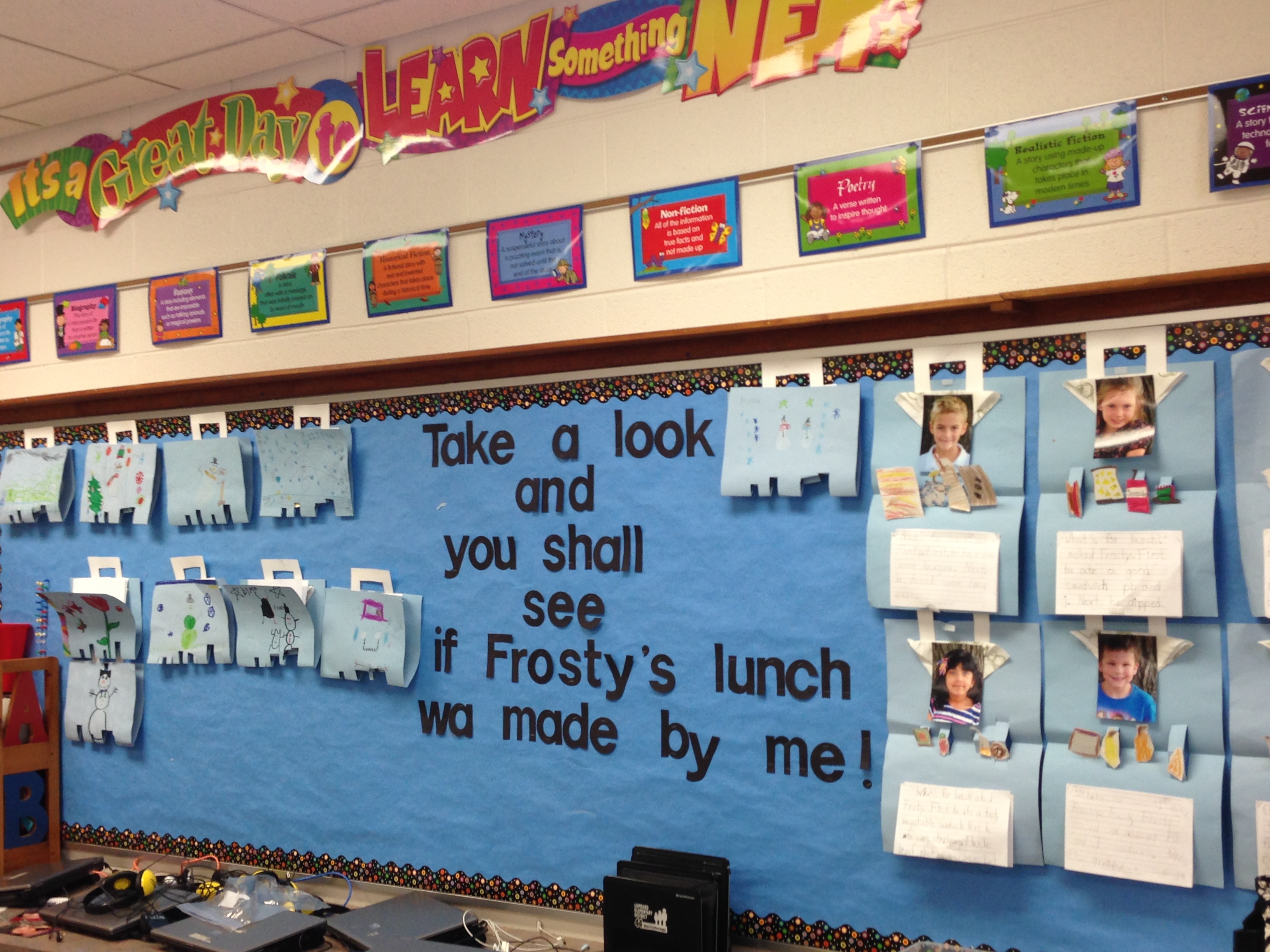
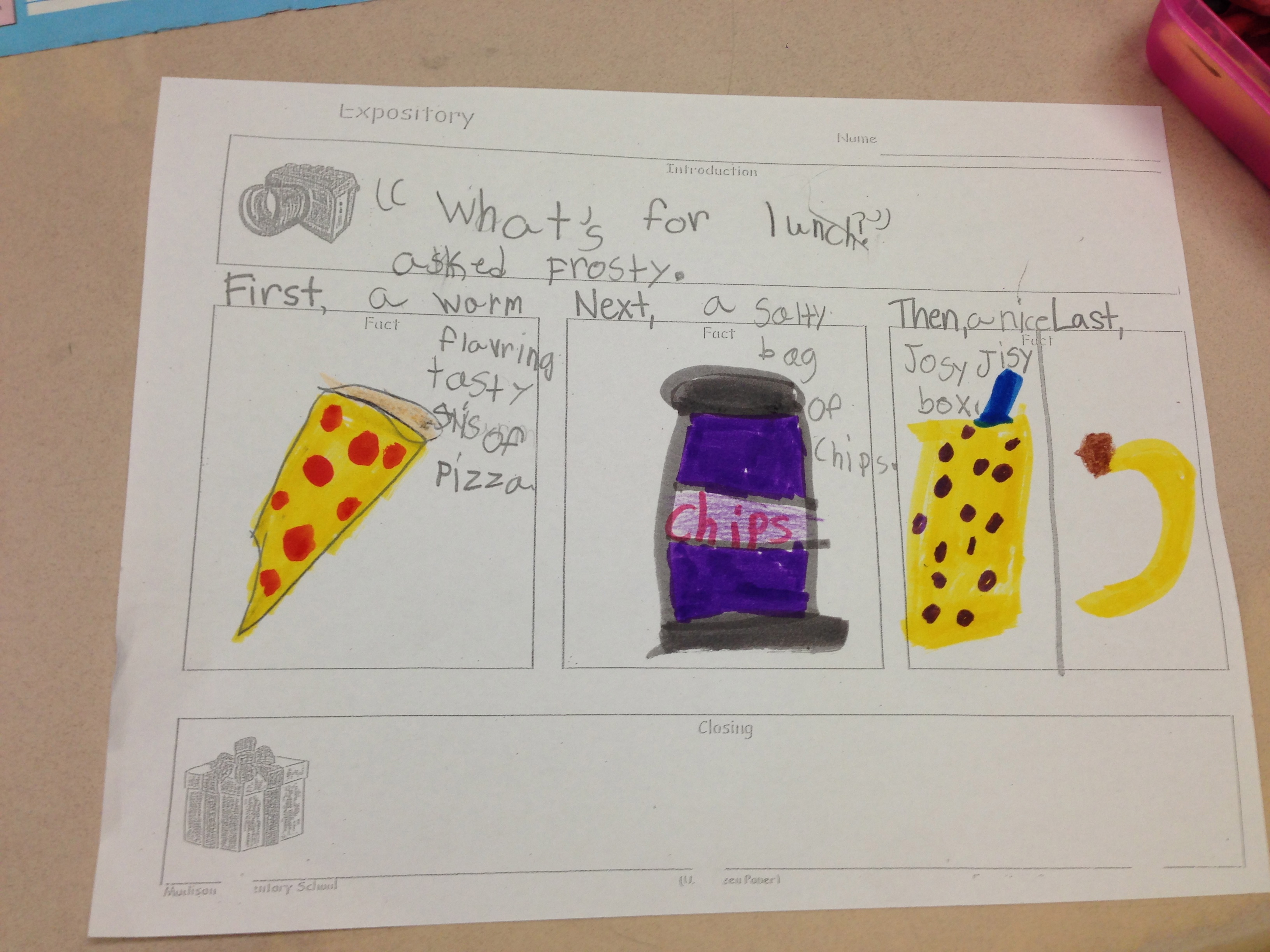
Even though it is March, the snow and cold make it feel like it’s still winter.  We took a break from our normal routine between reading units to complete a fun, creative writing craft.  Besides being a break, students were able to practice and apply the writing process from brainstorming to creating a final product.

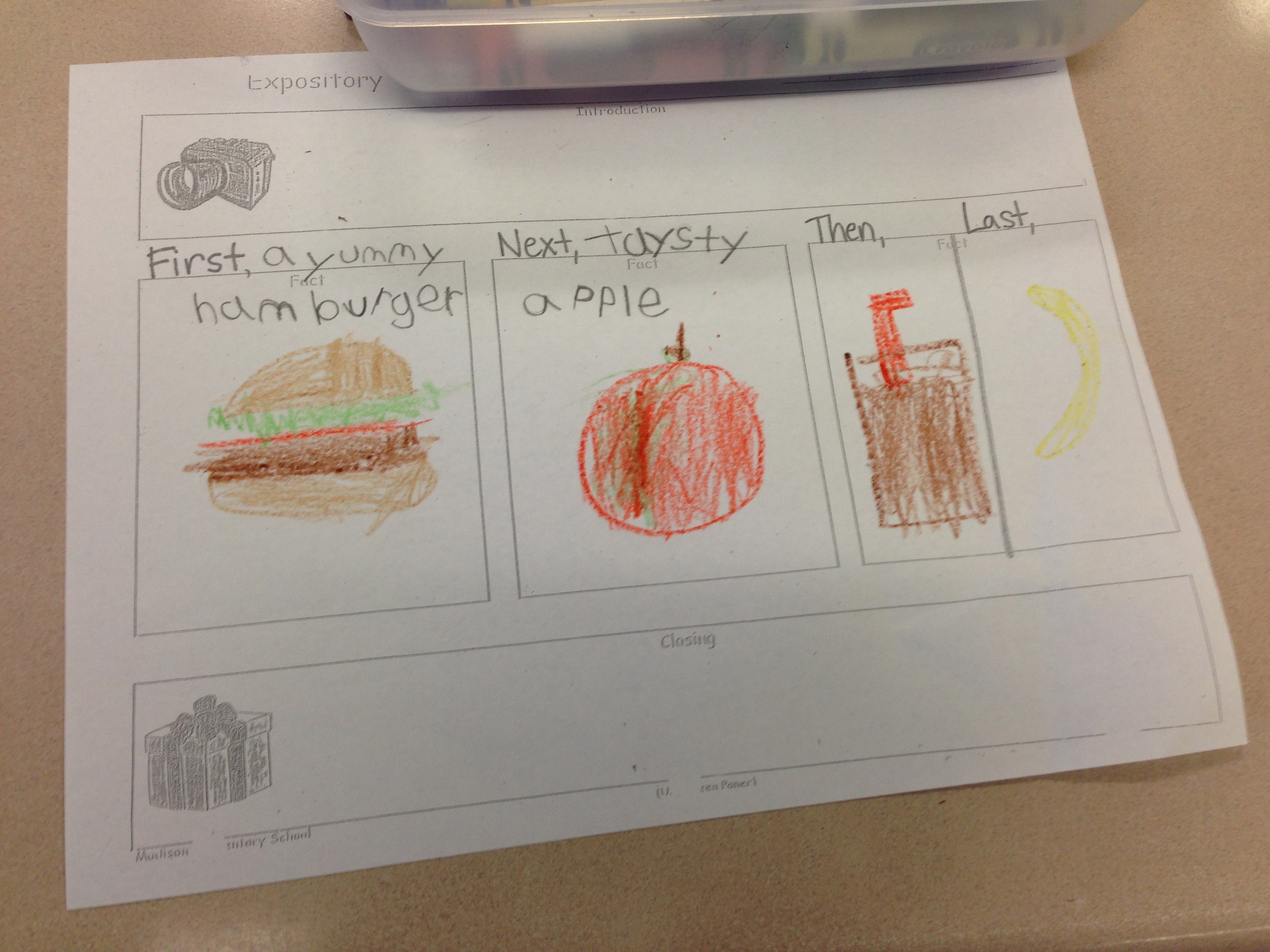
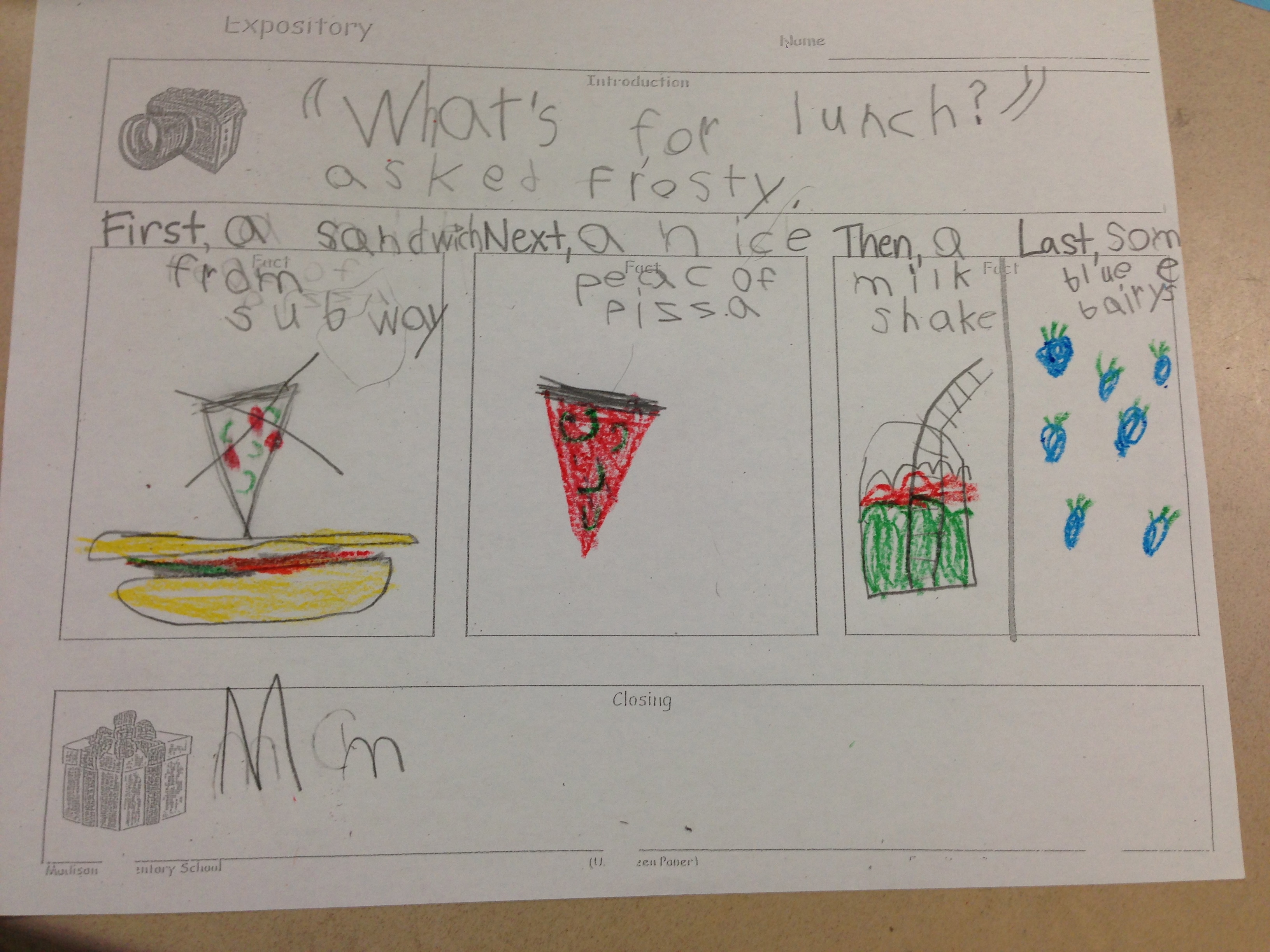
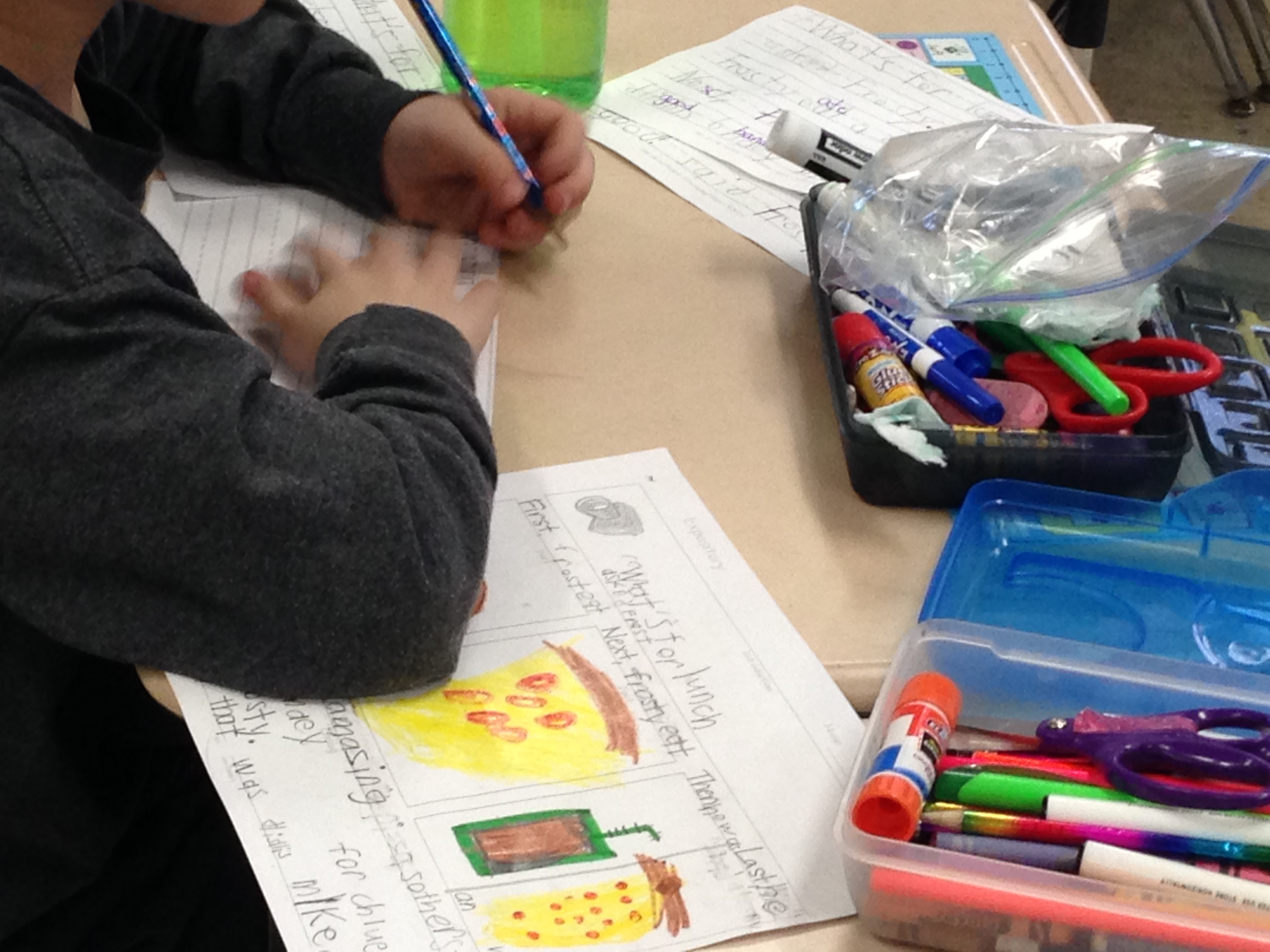
The project we created was titled “What’s in Frosty’s lunchbox?”.  Students got to write, design, and create what he ate for lunch.  They were given the topic and concluding sentences.  First, students completed a brainstorming sheet with food items-a sandwich, fruit, drink, and dessert.  They also needed to use a descriptive word with each item and draw a picture.

IMG_0422 IMG_0423 IMG_0424

Then, they turned their brainstorms into a written paragraph.  These paragraphs were edited to check sentence structure and help with spelling.  Then, they wrote their final version in their best handwriting.

IMG_0434 IMG_0432 IMG_0433

Students decorated the lunchbox and drew each piece of Frosty’s lunch before cutting it out, so we could make them pop up.

This project took 3 days to complete because of all the steps, but they turned out super cute.  It is important for students to practice the writing process and create an authentic product.

This project could definitely be extended for other characters besides Frosty.  What about Father’s Day-what’s in my dad’s lunch?, Nutrition month-what’s in my healthy lunch?, even a literary character’s lunch-the possibilities are endless!!
IMG_0436

IMG_0437

Older Entries Newer Entries