Winter Celebrations

1 Comment

As one of the only Jewish teachers in my school, I’m fortunate that my co-teachers are interested in learning about my traditions and celebrations.  As we neared Winter Break, they asked if I would do a mini-Hanukkah lesson.  I was excited to prepare and teach a lesson, and then went above and beyond after searching for activities online (thank you Google and Teachers Pay Teachers!)  I decided to do a cultural winter celebration activity during reading centers.


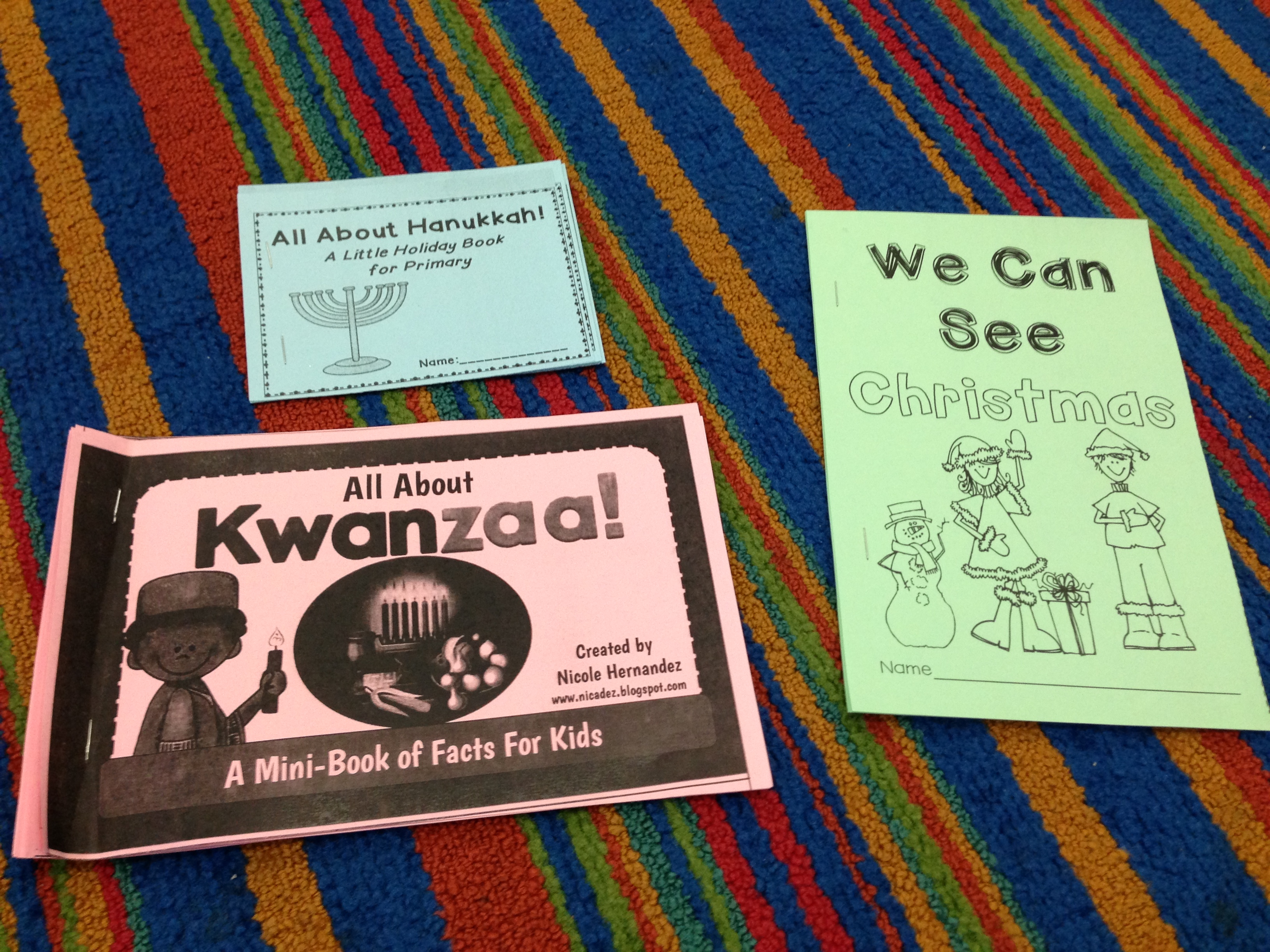
I spent a lot of time finding, creating, and organizing materials.  I used a primary introduction to Hanukkah mini book, introduction to Kwanzaa mini book, and a 3 holiday sorting activity (sorting main themes and characteristics); these activities were used for all guided reading groups, and I spent one day in each class leading centers.  I also found a Holiday Readers Theater.  I assigned each student a part, and put a high, medium, and low reader on each part so they could choral read together.  Each copy was highlighted, and students practiced their parts during guided reading on the second day of the lesson.  As a conclusion, each class performed the Readers Theater.
IMG_0299

These lessons took a lot of time to prep and plan, but I know it’s worth it.  Students need to be culturally aware of other religions and celebrations around the world.  They need to learn to appreciate diversity and that there are similarities between the celebrations.


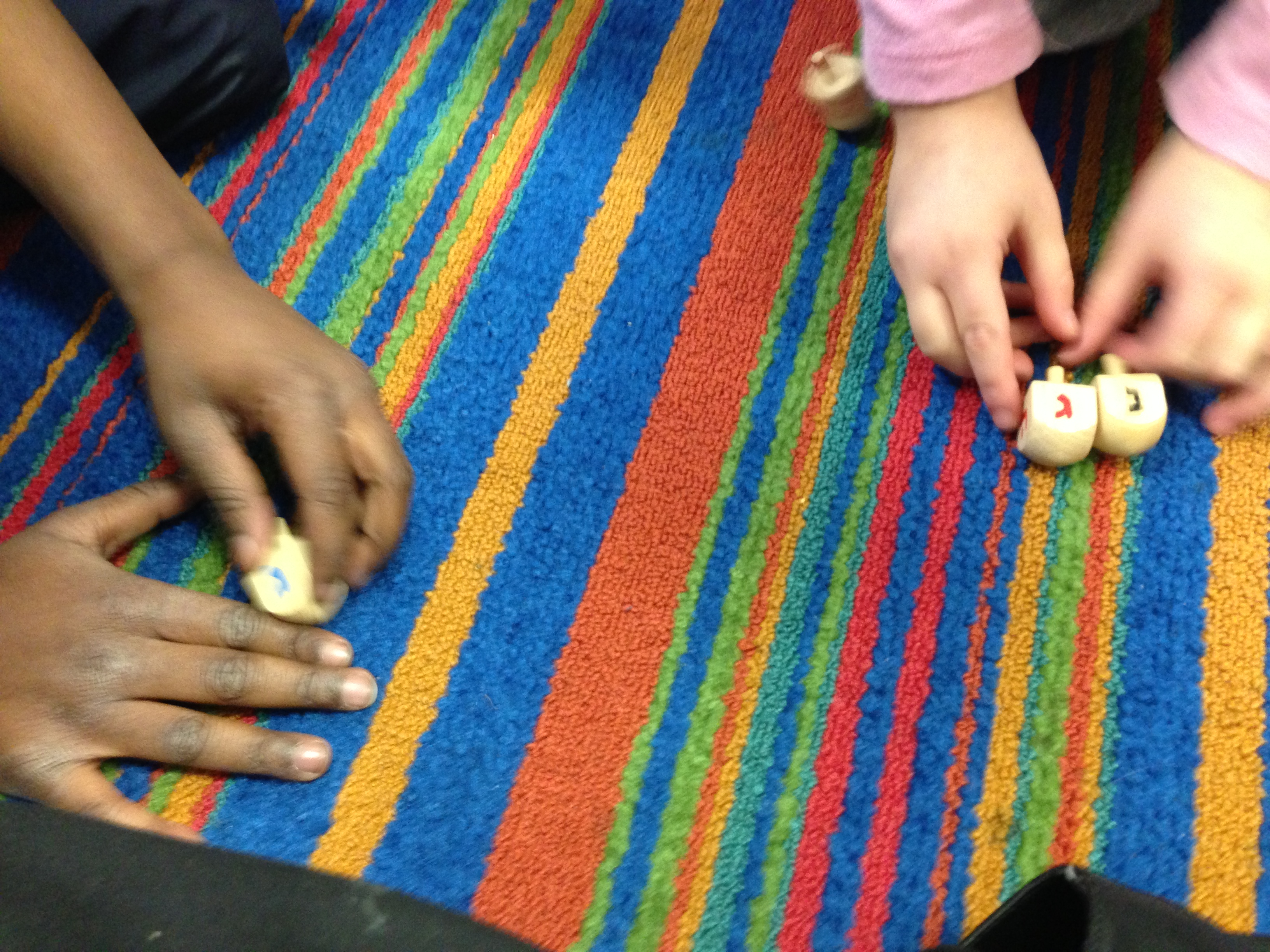
After finishing these lessons, I am excited the activities went very well.  Students didn’t have a lot of background knowledge about Hanukkah or Kwanzaa.  They were curious, interested, and tried hard reading the difficult words in the mini books.  While reading, we compared and contrasted details between the holidays.  They asked about certain vocabulary words, and it was eye-opening that I had to explain who African Americans are to help them understand who celebrates Kwanzaa.  We also discussed how Kwanzaa was different than the other holidays since it isn’t a religious holiday and was created in 1966.  I asked the students if it was an old or new holiday, and they said old; I had to give them context to compare 47 years versus 2000 with Christmas so they understood it’s fairly new!  Students loved playing the game of dreidel; I explained the rules and let them spin for fun.  Students wanted to know what letter they landed on and what it meant; there were cheers when they landed on Gimmel!
IMG_0300

I also have one student who celebrated Eid earlier this year.  During her small group, I gave her the opportunity to share about her holiday and traditions.  During our discussion, we were able to find similarities between Eid, Christmas, and Hanukkah.  I wish there had been more time to discuss deeper and really compare and contrast the different holidays.


The Readers Theater went well too.  It was the first time the students had done one, but they were excited.  They practiced their parts in small groups then as a whole class before performing.  We were able to record their performance using an iPad, and the students loved watching it!


I’m so glad I was able to teach this lesson and help students learn more about other cultures and celebrates happening around the world.  At the end of one of the small groups, I had time to do a whip-around, and the students shared one thing they had learned.  One student said, “Hanukkah and Christmas you can celebrate with different families and traditions”.  Another said, “Holidays are special to all people”.  I was proud of these lessons and that the students understood the bigger message I was teaching.
 

Happy Holidays! 

Disguising a Gingerbread Man

Leave a comment

In my quest to try some new things with technology and do a fun winter-holiday themed activity, I came across a Disguise a Gingerbread Man activity.  I love all the versions of the Gingerbread Man story, and thought it would be fun and creative for the students to think of a way to disguise the gingerbread man so he wouldn’t be eaten by the fox!

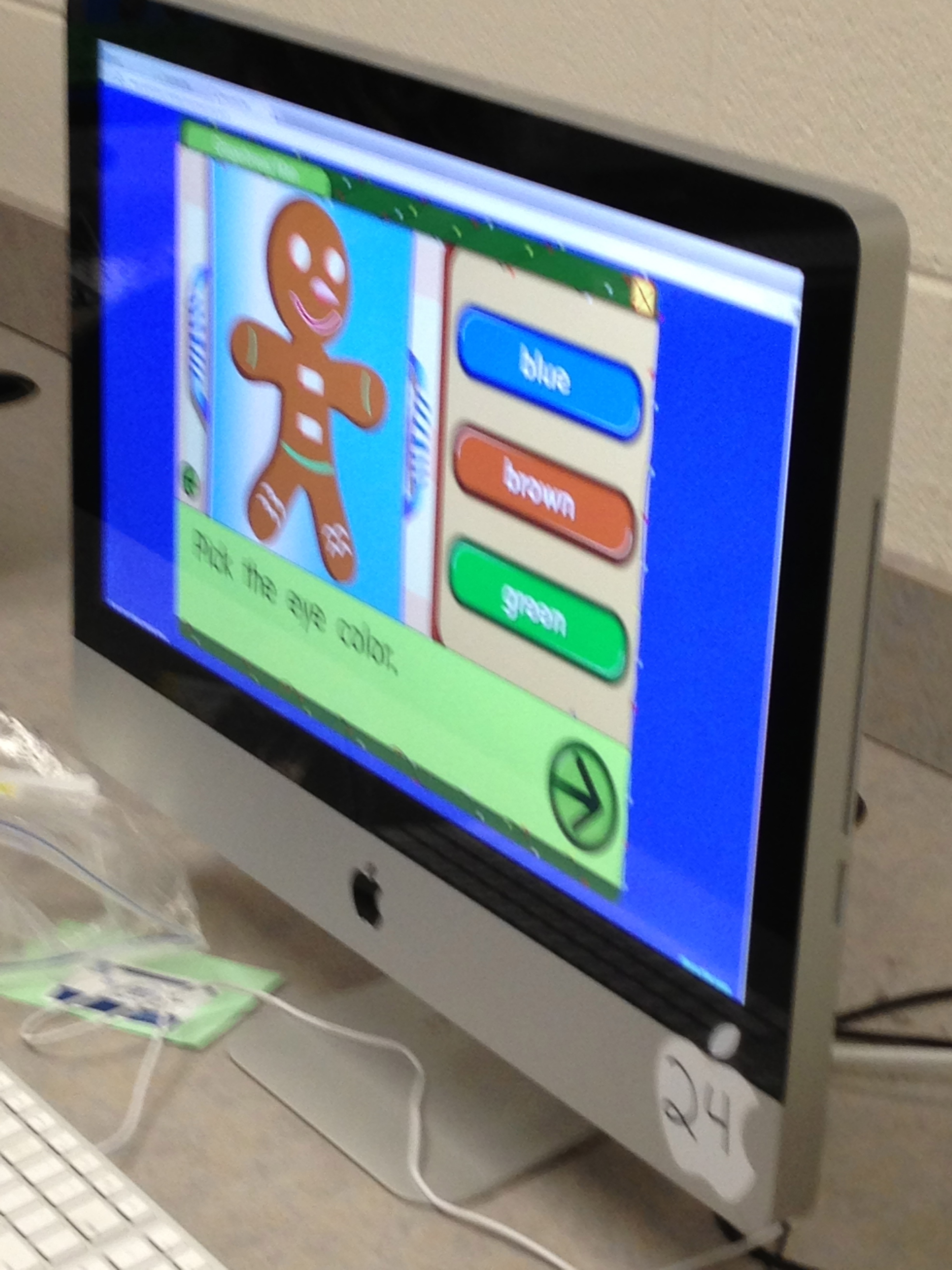
I met with the technology coach at my school to think of a way to do this.  Finally, we created a gingerbread man template in Notebook that the students could use to draw with the fun pens, add shapes, and write text describing the disguise they created.  We also found a Gingerbread story on Starfall as an introductory activity to review the story and think about how to design the Gingerbread Man.

The Gingerbread Man story  on the computer

The Gingerbread Man story on the computer

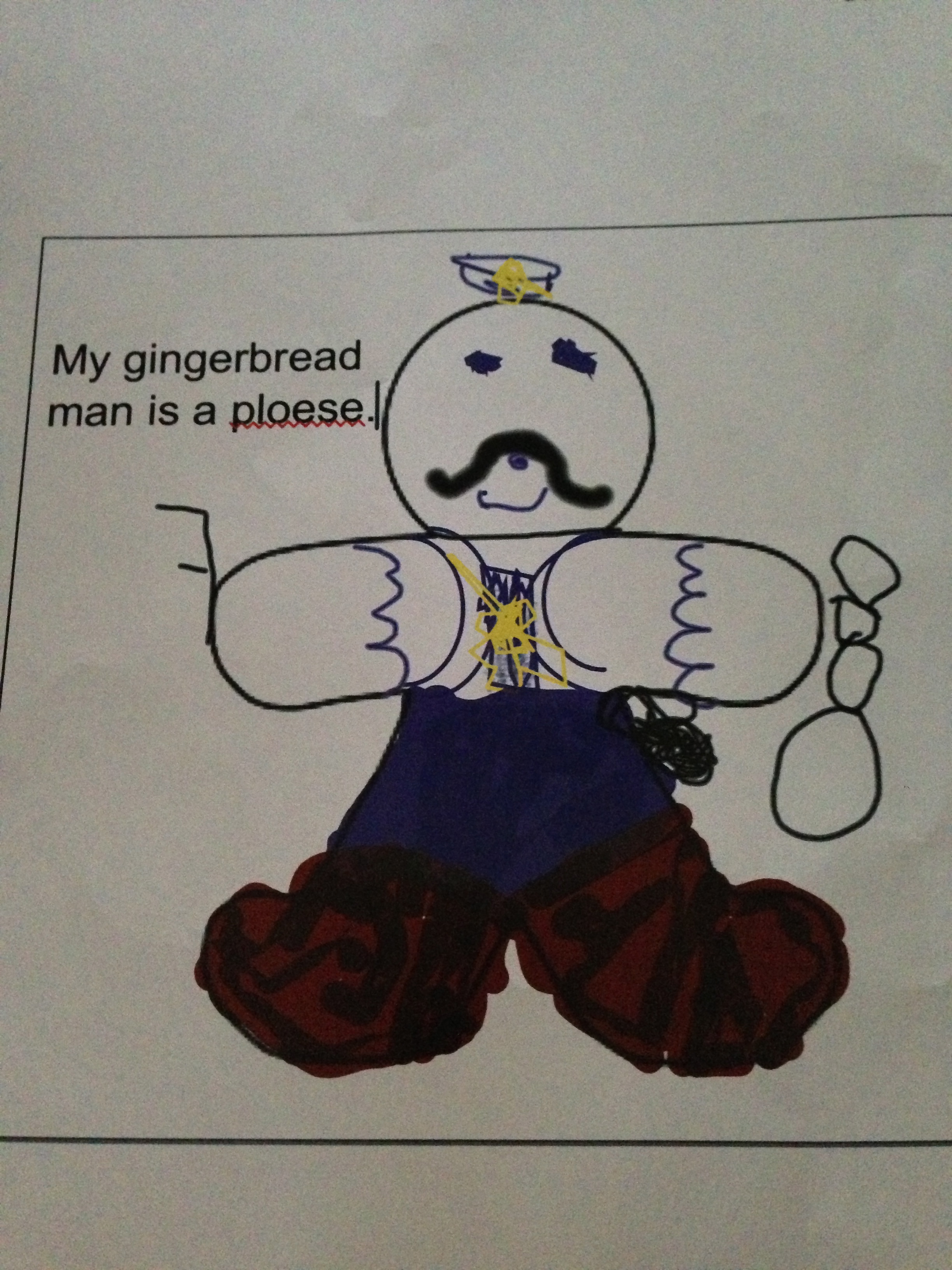
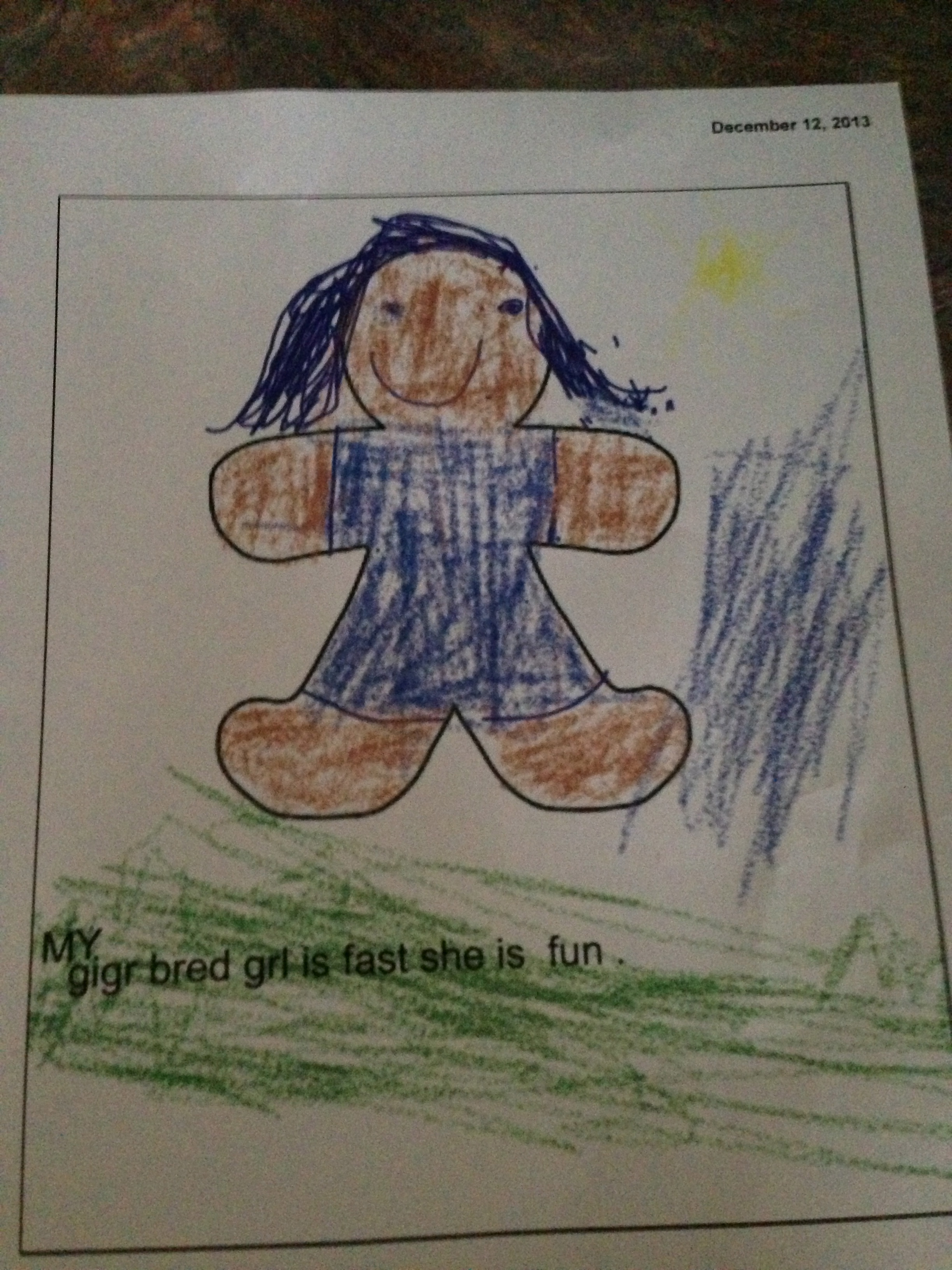
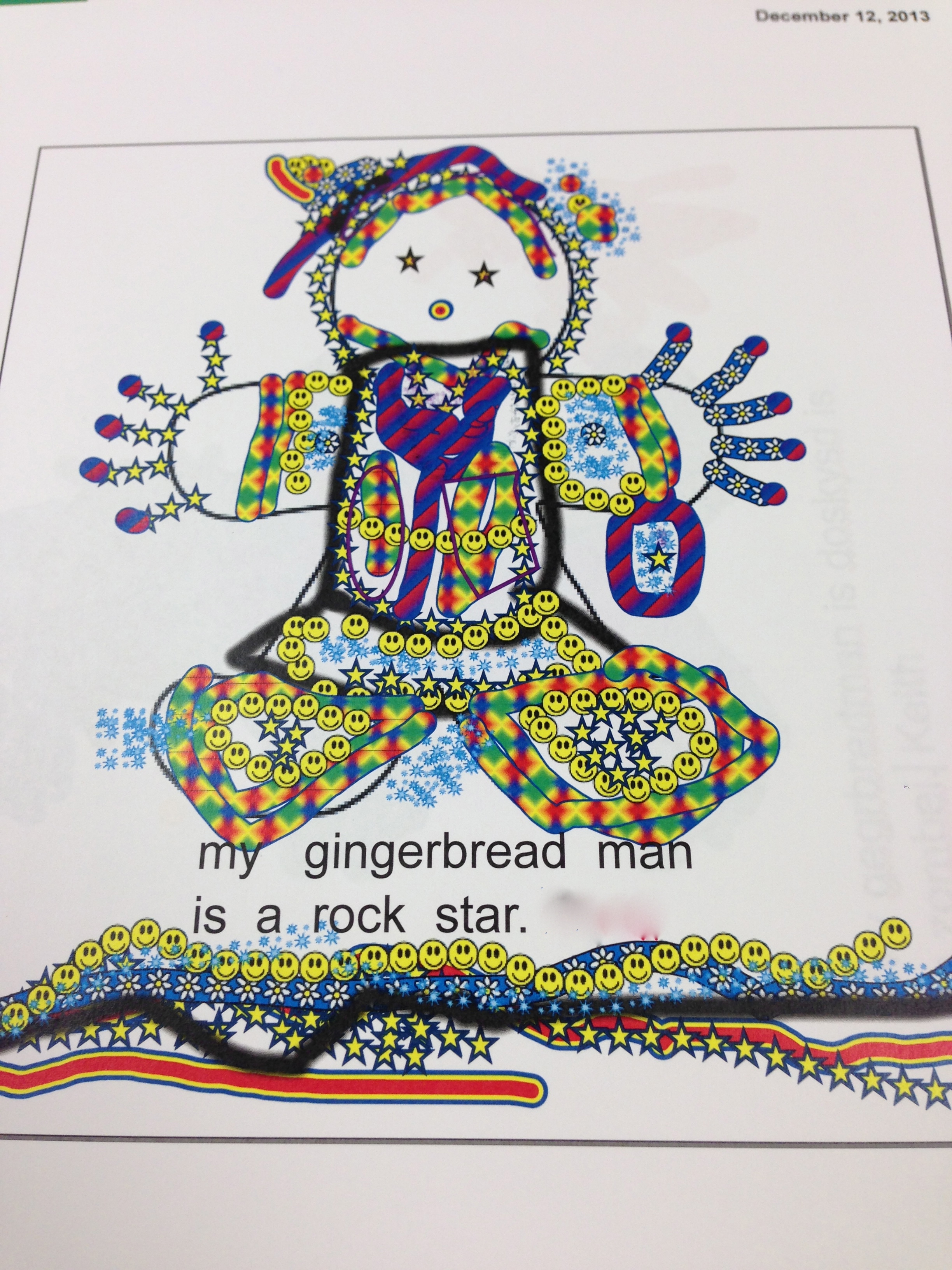
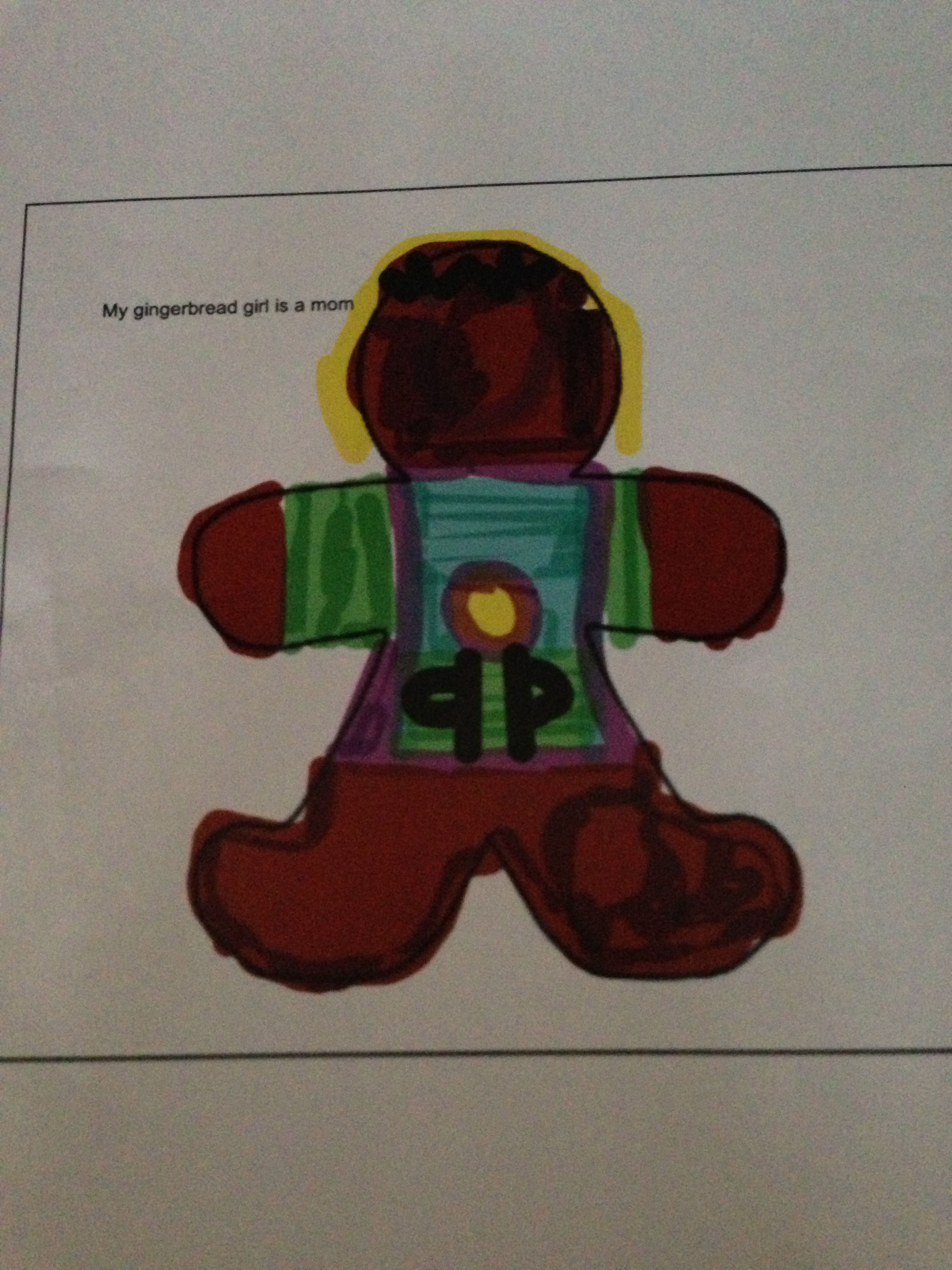
In the computer lab, both activities were explained and modeled, so students could work at their own pace.  It was a crazy hour in the lab (and I had to do it twice with both first grade classes!) helping students use the different tools, trouble shooting problems, showing them how to type, and printing their creations.  Even though it was crazy, it was fun to watch the students be excited and creative.  They loved just drawing and exploring the tools, especially the creative pen with the fun designs.  Most created gingerbread boys and girls, but some thought more outside the box creating ninjas, a Gremlin, a police officer, and a football player.  They were excited to take them home!

IMG_0271

IMG_0272


This was a fun winter project, and a great way for students to be creative and explore some new programs on the computer.  In the future, I would definitely repeat this project, but also extend the activity.  I liked that the students used the computer to draw, but I also could have them break the template home and disguise him as part of a family activity.  I would also have the students try to write a story, rather than one sentence “My Gingerbread Man is disguised as a …”.  They could tell where the Gingerbread man is, what he’s doing, how he escaped, etc.  Then, it would be more of a writing extension activity, in addition to technology and art; writing a complete story is a difficult task for first graders, but important for them to practice.  I’m glad we gave this activity a try, and it was a successful first attempt!

Here are examples of the Disguised Gingerbread Men!

IMG_0273 IMG_0275 IMG_0279
IMG_0282 IMG_0285 - Version 2 IMG_0286 - Version 2

IMG_0278IMG_0287 - Version 2

A Cornucopia of Thanks

Leave a comment

Last week at our first grade team meeting, we decided we wanted to do a writing activity for the students to write what they are thankful for.  We wanted to do something different than the standard turkey and writing in his feathers.  We thought of other Thanksgiving symbols and decided to use fruit in a cornucopia.  The teachers looked through books and templates they had, and I was ready to search for ideas on the computer.  It was a complete group effort to create and design this project.

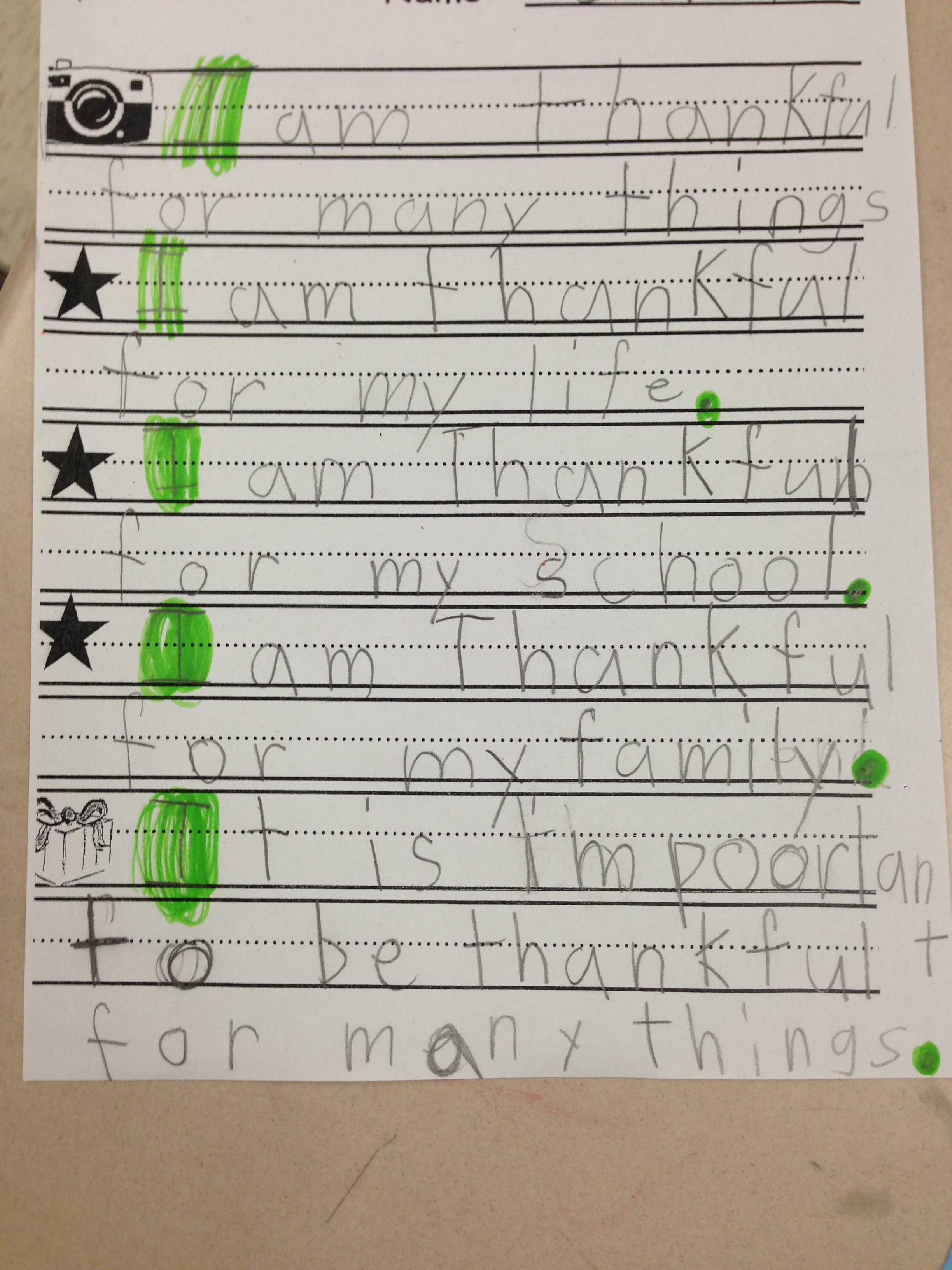
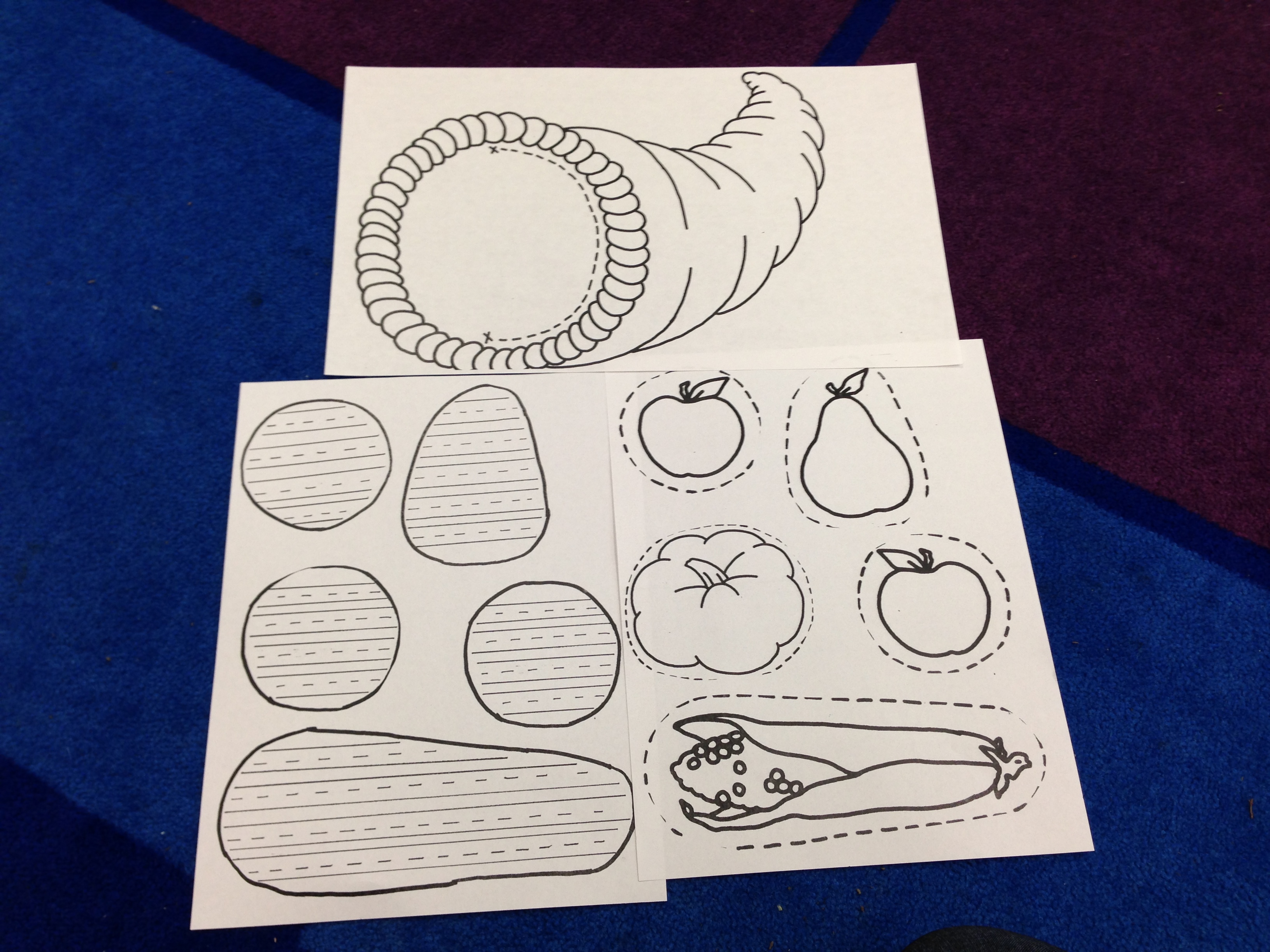
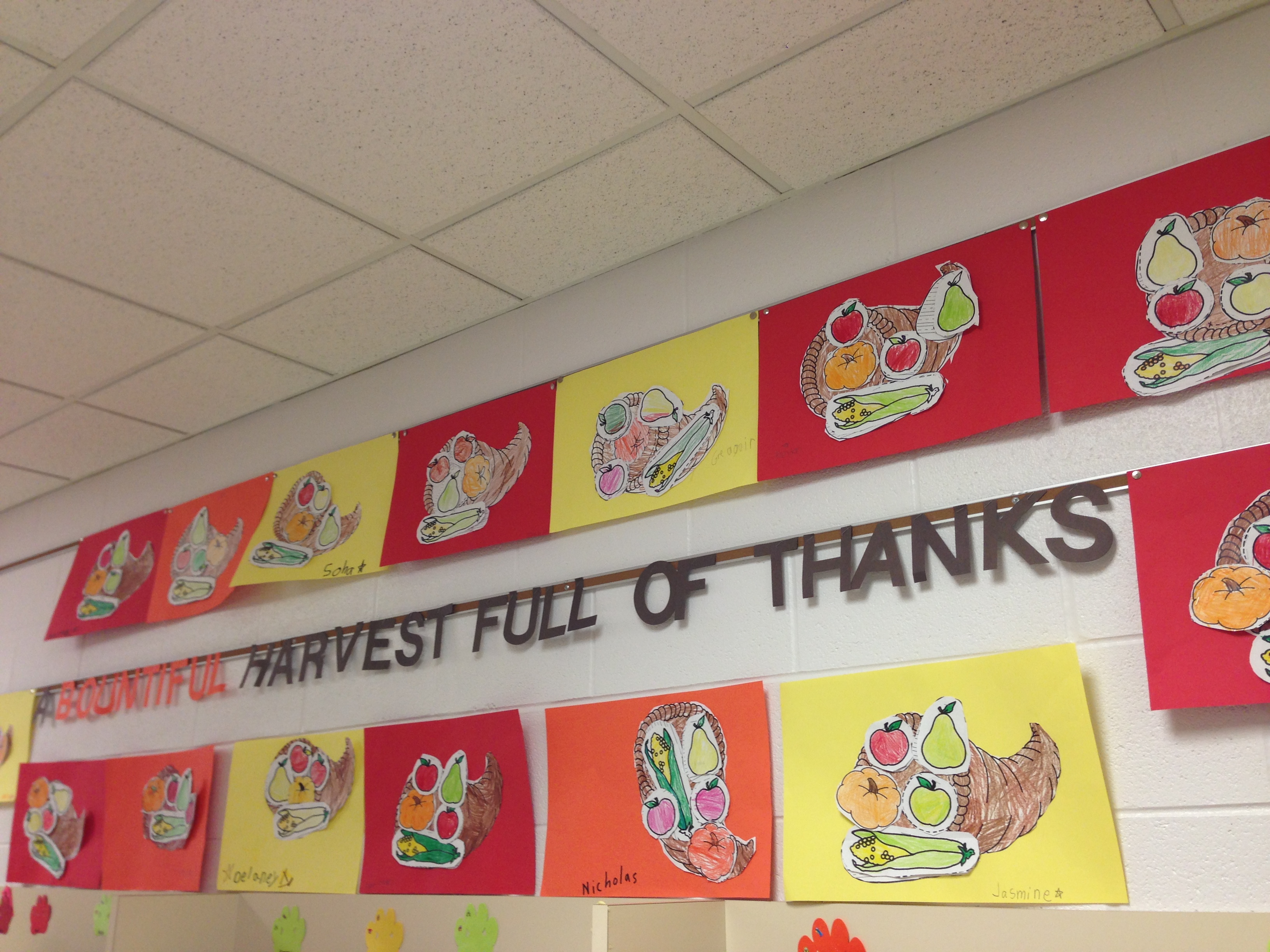
We took the students throughout the entire writing process.  First we discussed what it means to be thankful and brainstormed a list of ideas; we emphasized being thankful for nonmaterial things.  Then, the students wrote a rough draft that was scaffolded since it’s still the beginning of the year and we’re working on writing complete sentences and ideas.  After their piece was edited, the students rewrote each sentence on a piece of fruit.  The students then colored and cut out the fruit and cornucopias.  They received help attached the fruit to the writing to make it flip up, and then they finished assembling their work.

Brainstormed list of things we are thankful for

Brainstormed list of things we are thankful for

Rough Draft of a Student's Writing

Rough Draft of a Student’s Writing

Templates Used to Create the Project

Templates Used to Create the Project

These projects turned out very well and it was a nice change of pace from the regular curriculum.  There were a lot of steps and the cornucopias took a long time to create, but the students were engaged, thoughtful, and hard workers.  Sometimes everyone needs a break and to do something different and fun.

Giving thanks is an important skill to have, and this project was a meaningful way for students to apply and incorporate their knowledge and ideas into different subjects-writing, social studies, and art.  This is an activity I would definitely repeat and is something that could be adapted for different grade levels.

image_3

Happy Thanksgiving!

Perseverance and Fun

Leave a comment

Perseverance and Fun


In first grade, we are in the middle of our science unit and balance and motion.  Students have completed experiments to learn what are balance, stable position, and counterweights.  Using the FOSS curriculum, each lesson builds on the previous one.  Science is very hands-on, so students look forward to the experiments and having fun!


Last Friday, we completed the pencil challenge experiment.  Students were given a pencil, wire, and 2 clothespins and told to find a way to get the pencil to balance on its tip.  They were not given any further directions, just to think about what we had talked about and go experiment.

photo


Immediately, the students got to work.  It was fun to step back and see what happened.  Students put the clothespins on the pencil, wrapped the wire, and continuously tried to get the pencil to balance, while watching it fall to the floor.  We encouraged the students to keep going and promised them it was possible.  We tried giving them hints about what they’ve learned about where the counterweights should be in reference to the stable position.


We also told specific students when they were on the right track or getting closer.  It was interesting to watch when we told some students they were close, how others would look around and then try to mimic what that student started.  Some students started working in partners.  After some time, a couple 2nd graders who completed the experiment last year came to give some big hints.  One first grader got really close, and I gave him some big hints.


Finally, he was successful!  Everyone was very excited and gave him a round of applause.  Students now had a better idea what they needed to do and continued working.  He became an expert and was told to help some of his classmates; everyone started shouting his name because they wanted their pencil to balance.  While some students got discouraged or frustrated, no one gave up.  In the end, with all the experts our class had, everyone successfully found a way to balance the pencil on its point.


Afterwards, we reflected on the experiment-How did you get the pencil to balance? Why did that work?  What were some other ways you tried?  Where did the counterweights need to be and why?  By actually doing the investigating, science became real to the students, and they understand it.  And school was fun.  Shouldn’t everything be like this?!

photo

Motivation, Systems, and Rewards

2 Comments

Attending EdCamp Chicago this past weekend was a great experience for me because all the sessions and people and ideas achieved three goals: meeting and connecting with awesome educators, reinvigorating my love for teaching, and giving me ideas I want to try to implement in the classroom.  During a couple of sessions, the topic of extrinsic motivation and management systems came up.  I know this is a “hot topic”, but it is also one I’ve been observing and reflecting on since the beginning of the school year.

For the past two years, I have implemented and used a variety of systems and rewards in the classroom with my students.  I have had class meetings with my students to discuss, develop, and review the rules and expectations, but then I have systems and incentives on top of that.  I learned I had to be forceful and consistent, or the systems wouldn’t work.  Last year, with 30 students in my classroom, I had 3-4 systems going on at once, plus some for individual students!  It was a lot for me to handle, in addition to the actual teaching.  Some days I felt more like a police officer than a teacher; this was not the reason I wanted to be an educator.  I once had a conversation with my aunt, who also taught 2nd grade but only had 15-20 students in her class, about her behavior management systems, and she said she didn’t really have any.  I didn’t understand how she didn’t use any systems in her class!

Over the summer, as I searched and interviewed for a new job, I started thinking more about management systems and the differences between intrinsic and extrinsic motivation.  I did some searching and read blogs and articles how people only used intrinsic motivation in the classroom and were against all the fancy behavior management systems.  I have always had high expectations for my students, hold them accountable, and communicate praise or help students’ problem solve to make improvements.  Although I read of others’ successes, I was unsure how to do it myself because it did not correlate with my personal experiences.

This year, there are only 20 students in each 1st grade class.  One of my first realizations was how much you can get done during the day and work with all the students in the class; 10 kids makes a huge difference!  I spent the first few weeks feeling the room looked empty and something was missing because there were so many less kids.  Each teacher has a management system-stoplight cards, clip chart, Class Dojo-but she doesn’t use it all the time; she doesn’t need to.  With the routines and expectations in place, things just roll and work gets done and the kids respond!  Yes, some students have individual systems to support their specific needs, but that is a form of differentiation.  Yes, the school uses a school-wide PBIS motivation of handing out individual Panther Paws and whole class Golden Panthers.  One class received their first celebration last week (5 Golden Panthers), and it was so much fun watching the principal deliver the award and “Celebration” was played over the loudspeaker and the kids had a dance party!

Yes, we should focus on the positives, offer praise when students are successful or make baby steps towards a larger goal.  Yes, sometimes there need to be consequences, but they should not be the overall focus.  Yes, management systems need to be in place when class sizes increase in order for any learning to be successful.  I’ve realized it is possible to be a successful teacher and do what you love, teach, without always worrying about or focusing on behavior and systems.  Students know when they’ve done a good job, when they’re successful, when they’ve given their best effort.  And that smile on their face is the biggest reward of all.

star

The Power of We: PLCs

Leave a comment

teamLast week, I had an amazing opportunity of 2 days of Professional Development provided by my school district to learn how to become better and stronger PLCs (Professional Learning Communities).  There were so many ideas and information presented to us as we learned what makes up a PLN and how some of these ideas can be applied to make us better teachers.

The presentations gave me many opportunities to reflect and ask questions: What aspects of a PLC do we already do well?  What are some components we need to implement or do better?  How can we change the schedule to better utilize our time and resources to become a stronger Team?  When will we start this process?


I was able to also reflect on how lucky I am to be working in a welcoming and strong school.  As an assistant, the first grade team has welcomed my knowledge and experiences as an additional resource; I know what is going on with the schedule, help plan lessons and activities, and share my observations and suggestions.  The support team has also welcomed me and been appreciative of the assistance I’ve provided in the classroom and data I’ve collected for specific students.  We meet and collaborate often to continue supporting students and best meet their needs.  Slowly, these teams are becoming more aware of creating common assessments and collecting data.  While we have a lot of strengths, there are still areas we can improve; with everyone working together, brainstorming, trying new assessments, analyzing data, and providing additional teacher, I am confident we will be able to get better and stronger.


Also, I have continued to realize the strong PLN I have connecting with others via Twitter.  I have access to many articles and blogs, can ask questions, share my ideas, and participate in chats when possible.  I have learned a lot and gathered ideas I have used or want to try in the future in my classroom.  I have also participated in three EdCamps, where I have met some of the people I communicate with in person and have continued learning and growing.  I’m grateful to everyone I have connected with and learned from.


PLCs and PLNs are powerful tools that have helped me become a stronger teacher and learn ideas I never would have created on my own.  I can’t wait to see what the future brings as we continue working together and becoming stronger.


Sharing the Love of Reading

Leave a comment

I love reading.  Losing myself in a story and connecting with the characters is a great way to relax and enjoy myself.  I could spend hours in a bookstore browsing, including in the children’s section.  I believe it is my responsibility as an educator to inspire a new generation of children to become life-long readers.


Last year in 2nd grade, I loved sharing my favorite authors and stories with my students.  It gave my joy watching my students go to the classroom library and pick out some of my favorites, or what had become their favorite series.  When I introduced Amelia Bedelia stories, one of my favorite characters, the students laughed a lot and then those books were flying off the shelves.  I loved when students asked me to read a book during Daily 5 that I had read during a Read Aloud or introducing a reading strategy.  It was very rewarding at the end of the school year to hear from parents how much their child loved to read all the time, even compared to some of their older siblings; they attributed the love of reading to the teacher.  It helped me realize that I had accomplished my goal of sharing my love for reading with my students.


This year in 1st grade, we have an Author of the Week.  Each day, we read a different book written by that author for a read aloud.  We talk about the author and illustrator, and sometimes they’re the same person, if the book has a dedication page, and styles and similarities between the authors.  This theme really helps students understand the purpose of writing and the parts of a book.  When it is library check out time, students love finding books written by the current, or past, Author of the Week, and they proudly share these with their teachers!  The librarian loves having a theme because she can more easily direct young readers to good books, and she creates a stack of books by that week’s author for the teachers to use.  So far this year, Eric Carle, Leo Lionni, Jan Brett, and Mo Willems have been the favorite authors.  I helped introduce Mo Willems using the Elephant and Piggie books; I have never had students laugh out loud as loudly as mine did when hearing these stories.  Even at this young age, students have a joy for reading and hearing new stories, and I think we are successful at instilling a love for reading in them.


What are some of your favorite authors and stories?  How else do you share your love for reading in the classroom?

photo (4)

Take a Risk

Leave a comment

When I heard the Color Run was coming to Chicago, I was intrigued due to the popularity of the event and pictures I’ve seen of friends who have participated.  I immediately emailed a group of friends, and we organized a team.  I was excited for the event because it would be a fun and different race to complete with friends.


As the race approached and I figured out what to wear, I was excited and a little anxious.  I am not a fan of getting messy, especially my hair.  The idea of color being thrown at me was not the most comforting feeling.  I talked with people who had participated in similar races to get an idea what it would be like, and I bought a hat to protect my hair.


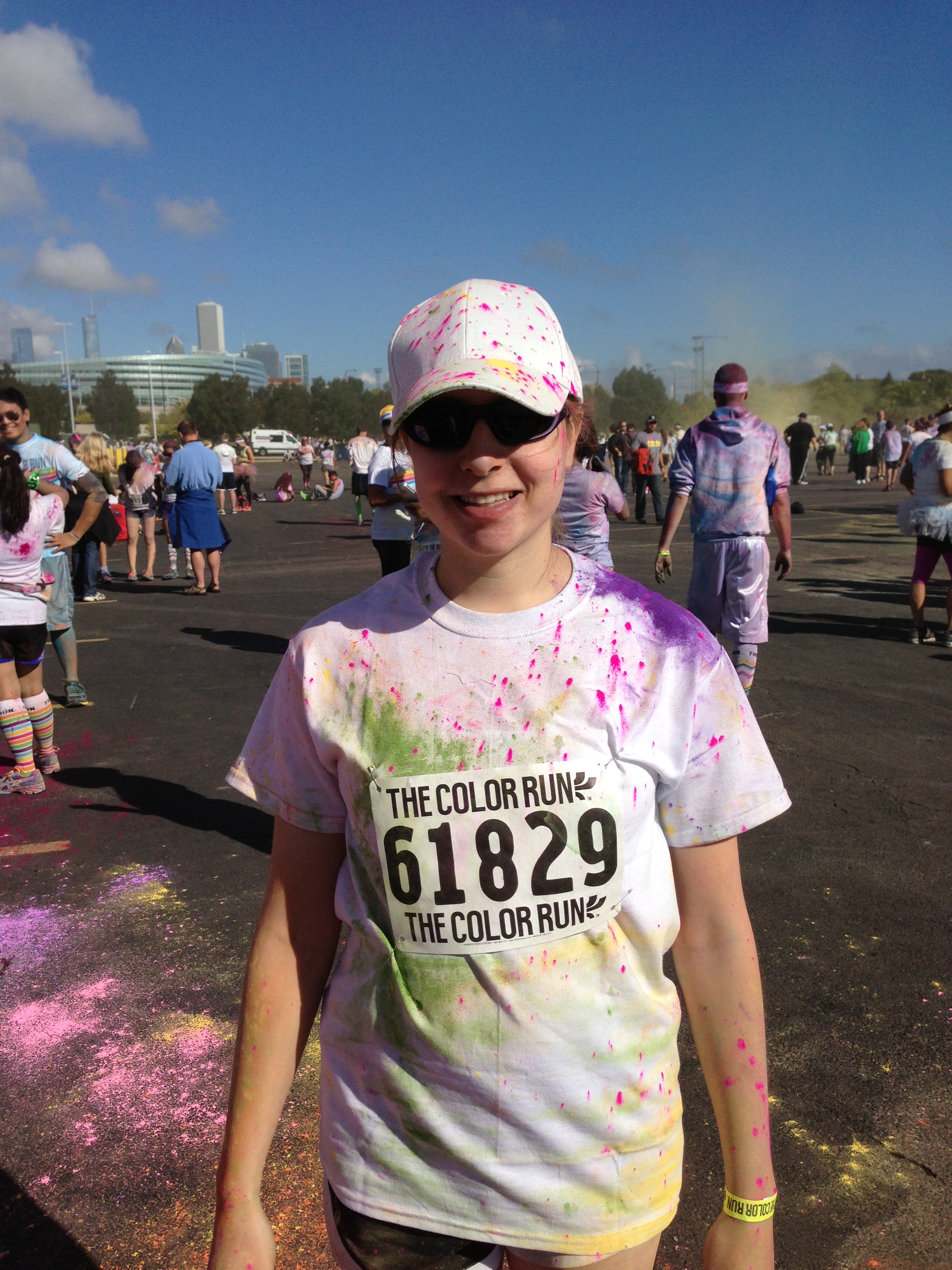
On race day, even though I was a little nervous, I was also very excited.  There was so much positive energy and excitement at the beginning of the race that I was ready to go!  My friends and I started the run, and it was a lot of fun walking and talking.  As we approached the first color station, pink, I was a little nervous, so I ran through the middle to avoid getting fully splashed.  It wasn’t as bad as I expected, and I loosened up a bit as we kept going.


I then strategized with my friends to figure out how we could get more color at each station.  At the next color, orange, we ran on the right side; for the blue station, we ran on the left side to even out.  We ran through the colors getting decorated and laughing along the way.


After crossing the finish line, we circled up as a group and opened up the extra color packets to celebrate.  The color got all over to finish the decorating, but we were smiling and laughing.  We then took a picture to prove we successfully finished.  Everyone said they had a great time, and we can’t wait to do it again.


Sometimes we need to step out of our comfort zone, take a risk, and try something that may be scary or new.  If I hadn’t taken the risk of running the Color Run and getting a little messy, I would have missed out on the chance to have a lot of fun with friends.  It was a risk, but definitely worth it!

image_3


The Art of Play

Leave a comment

Teaching First Grade has reminded me how new everything is to these students.  They truly are discovering the world around them.  Not only do we want to teach them to identify letters and sounds, how to read, and introduce numbers and counting, but it is also our responsibility to teach them the rules and routines of school and how to interact and play with their peers.  It is a long school day with a lot of information to take in for a young child.  Sometimes these kids just need to a break and chance to play.

Play can happen in the form of a break, game, or recess, or as an activity in a lesson.  For a math exploration activity, students were split into 3 groups and told to explore the materials-base 10 blocks, pattern blocks, and geoboards.  Some of these materials were new to the students, and the students loved being able to build and create designs.  To introduce the science unit of balancing, students were given a tagboard crayfish and 2 clothespins; they were told to find a way to balance the crayfish on one finger.  The students were creative and tried putting the clothespins in different places.  Some students also tried balancing the crayfish in other places, such as their forearms, and later, some tried to balance their own body on one foot.  They had fun being hands-on and exploring; as a result, they were able to correctly answer my objectives: what is balancing and what is the purpose of counter-weights.

Even with the increasing standards and demands of school, we can’t lose sight of the fact we are teaching young children.  Sometimes they just need to have fun and have the chance to play.  picstitch

Crossing the Finish Line-Accomplishing a Goal

Comments Off on Crossing the Finish Line-Accomplishing a Goal

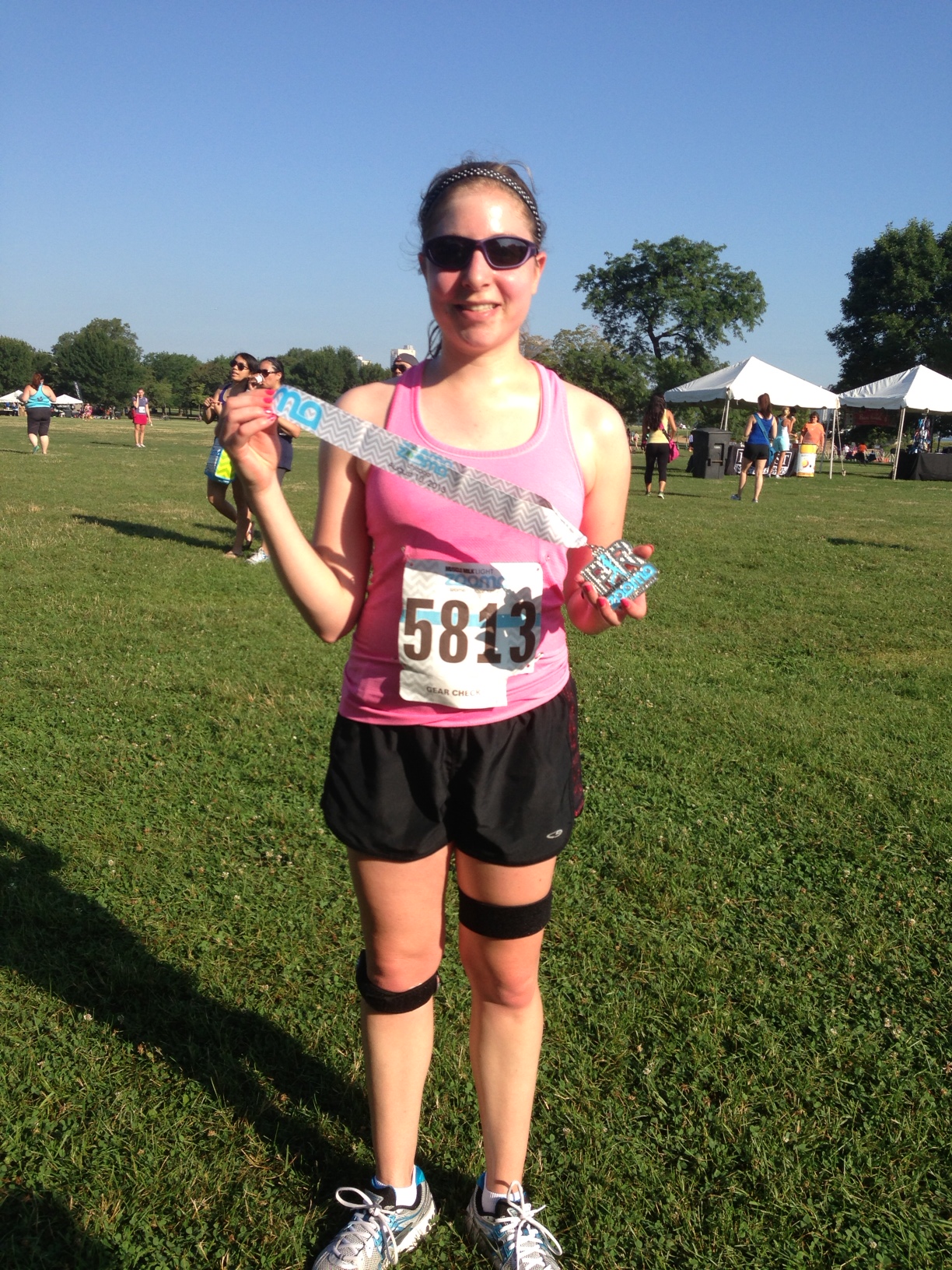
At the beginning of the summer, I learned about a new race coming to Chicago sponsored by Zooma, an organization promoting and celebrating women running.  I was intrigued because not only would I run along the beautiful lake in Chicago, but there was a weekend of events attached and awesome swag for registering-a racing expo, speakers the night before the race, a Mocktail party, and a post-race celebration with yoga, massages, food, and wine!  I signed up to run my first 10K race and began thinking how I was going to accomplish this goal.  I had never run more than a 5K, but with determination and some training, I knew I would be able to do it.

However, my training was quickly slowed as I injured my knee.  I would be in severe pain after running only a couple miles, then walking and stairs were painful for the next couple days.  This left me running about once a week and then taking a break from exercising for a couple days after that.  I consulted trainers and therapists for stretching my IT band (which was causing the knee pain), ran with bands around my knee to try to prevent pain, and continued an overall strengthening plan of weights, yoga, and Pilates.  After running a 5K race mid-July, I took a two week break from running.  Icing and Aleve became daily friends.  I continued taking long walks, including around the San Diego Zoo on vacation, but was not able to train; this was 2-3 weeks before my race!

As the race week approached, I was torn what to do-I still wanted to run but knew I was not prepared to run 6.2 miles and was worried about further injuring my knee.  However, I had set the goal to run and was still intrigued by the celebration weekend.  I decided I was going to run; I would do a combination of running and walking, but I would cross the finish line.

Friday night, I headed into the city to begin getting into race-mode.  I picked up my race number, walked around the expo, heard some speakers, met a friend for dinner, and went to Mocktails before spending the night in a luxurious room.  Saturday morning I woke up to get ready and headed to the start of the race.  It was nice being around other women runners and feeling the positive energy and excitement.  However, I was anxious as the start time approached; I had never run 6 miles and was nervous about my knee hurting.  I knew I could run at least half the race (3 miles) and hoped adrenaline would get me through the rest; I knew once I stopped to walk, it would be much harder to get back into running.

Finally the race began.  I started my music playlist, filled with songs to keep my energy up.  I waved to my family there to support me.  Throughout the race, I repeated in my head, “Slow and steady”.  You can do this.  Keep going”.  While my knee hurt, I kept running.  Seeing my family at the halfway point gave me a burst of energy.  I ran 4 miles, 2/3 of the race, before stopping to give my knee a break.  I walked a bit, ran another mile, then walked again because I wanted to run across the finish line.  Half a mile from the end, I began running and pushed through knowing the finish line was close.  Finally, I could see it.  I kept running and finally crossed the finish line.  I did it.  I ran and finished a 10K and accomplished my goal.

The past year has been filled with personal challenges for me.  Setting and achieving my goal of running a 10K was something I did for me as I’ve worked hard to rediscover my self-confidence and what makes me happy. As the school year is about to begin, I want to carry the “I can do this” mantra into the classroom.  I want to continue having high expectations for my students and helping them set and achieve their own goals.  I want to support them along their learning journeys, let them know it’s okay to make mistakes and have setbacks, but to push through to find success.  I want to see them successfully cross the finish line of success and say “I did it”.

The school year brings new challenges and potential setbacks, but with hard work, we can all accomplish our goals.  What goal will you set for this year?

10k finish

Newer Entries